The Fourth Cloud Landscape: Understanding the Approaches
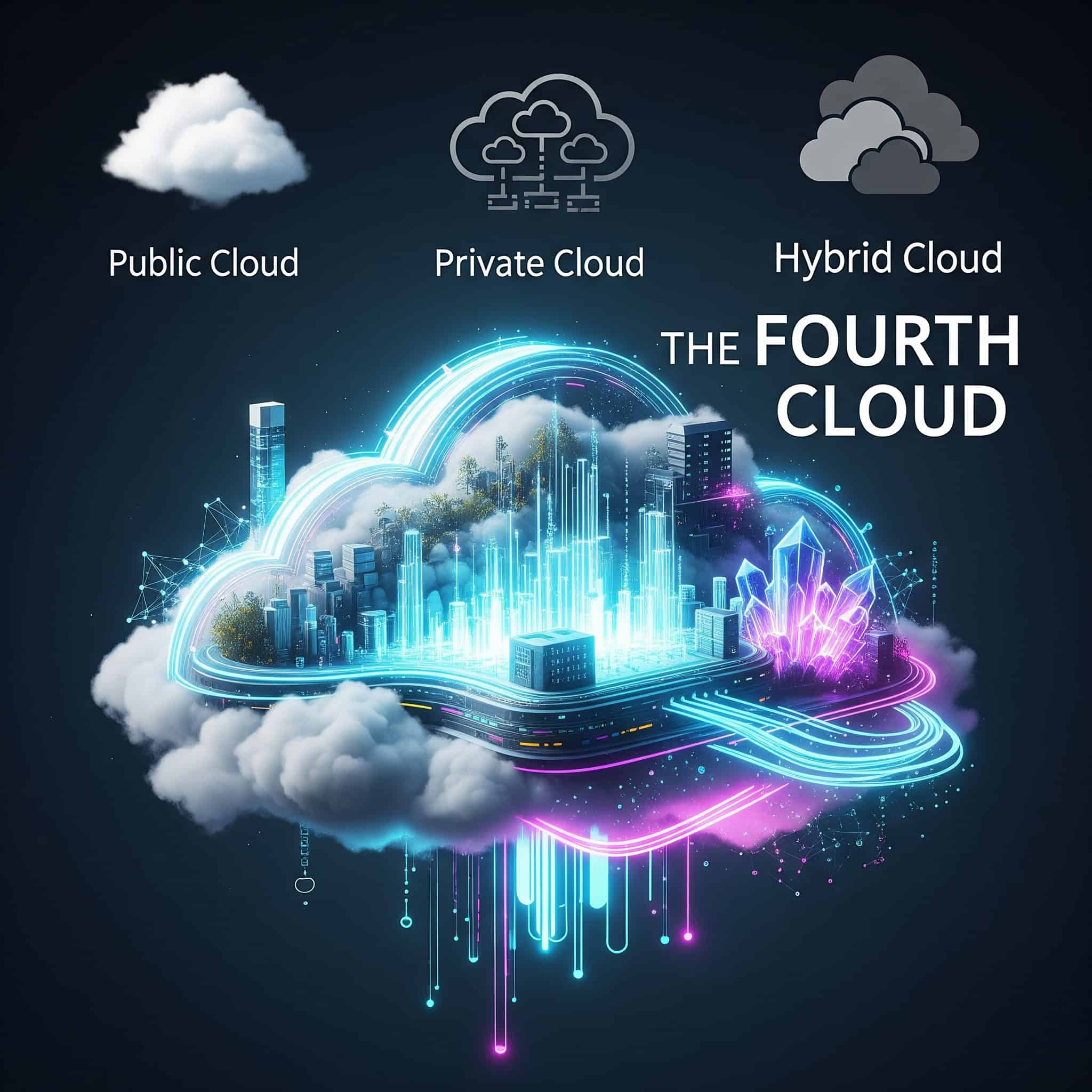
There’s a new pattern emerging in enterprise infrastructure—the Fourth Cloud. It’s not a public cloud, it’s not traditional on-prem, and it’s not a hyperconverged band-aid. It’s a true cloud-native platform experience delivered wherever the business needs it—data center, edge, or regulated enclave.
Several vendors are racing to own this space. But they’re not approaching it the same way. This post doesn’t compare features or declare winners. Instead, it maps how each vendor interprets the Fourth Cloud concept, and what that means for platform engineering teams trying to build their internal platforms around these offers.
Defining the Fourth Cloud
Is This Just Another Private Cloud?
Let’s address the elephant in the room: how is the Fourth Cloud different from traditional or modern private cloud?
The Fourth Cloud is a subset of private cloud in terms of deployment model (on-prem, edge, etc.), but a distinct category in terms of platform behavior, expectations, and delivery model.
Where traditional private cloud (like what you might build with OpenStack or vSphere) focuses on virtual machines and basic automation, the Fourth Cloud offers:
- A cloud-native developer experience out-of-the-box (think: Kubernetes, self-service provisioning, integrated CI/CD paths)
- A unified platform abstraction, with built-in identity, observability, object storage, and often API-driven resource orchestration
- A productized package—delivered, installed, and supported as a cohesive platform, not a stitching of tools
- In some cases, hardware-software co-design that treats infrastructure as a tightly integrated system, not a loosely coupled stack
Yes, some enterprise vendors like IBM and Oracle offer cloud services or infrastructure that could be installed on-prem. But these offerings rarely meet the bar for developer-first, productized platform delivery. Instead, they’re extensions of existing public cloud or legacy app hosting strategies.
Think of the Fourth Cloud as the natural evolution of private cloud—driven by the same abstractions that built public cloud, but delivered wherever your business needs to operate.
The Fourth Cloud isn’t a product. It’s a category shift. It’s what happens when:
- Developers expect a cloud-native experience (APIs, automation, self-service)
- Infrastructure teams demand control, resilience, and cost predictability
- Business units need workloads to run somewhere other than hyperscalers
A Fourth Cloud solution delivers:
- The operating model of the cloud (Kubernetes, Terraform, logging, IAM)
- With the hardware, security, and cost model of on-prem
- Packaged as a platform, not a project
Let’s look at how vendors are responding.
VMware Cloud Foundation: Software-First Legacy with Cloud-Native Lineage
VMware’s VCF was early to market with the idea of an integrated platform. While it carries the weight of traditional virtualization, it also includes assets from the Pivotal acquisition and a rich Kubernetes lineage through Tanzu. VMware supports some of the most cloud-native-compliant Kubernetes implementations available from a major vendor. But the Fourth Cloud is more than just offering Kubernetes—it’s about delivering critical platform abstractions such as object storage, identity management, and role-based access as integrated services. VMware has some of these pieces, but they often require stitching together or sit behind licensing gates.
- Approach: Software-first, partner-delivered hardware
- Strength: Familiarity for IT teams, robust Kubernetes heritage (Tanzu, Spring ecosystem)
- Gap: Complexity in integration, perceived fragmentation, licensing overhead
Nutanix: Hybrid Flexibility with Tight Hardware Integration
Nutanix started as hyperconverged infrastructure (HCI), but has evolved. Their partnerships with HPE and Dell allow for tight hardware-software coupling, including lifecycle management. Their cloud-native ambitions are more recent, but their investment in Kubernetes signals a move toward the Fourth Cloud space.
- Approach: HCI-first, hybrid-enabled
- Strength: Mature hardware management, strong storage story
- Gap: Less opinionated developer experience; platform story still evolving
HPE Morpheus & VM Essentials: Cloud-Like Abstraction, Modular Delivery
HPE is experimenting with multiple paths. Morpheus delivers a hybrid cloud management layer; VM Essentials is a light-touch private cloud starter. But both rely on existing hardware portfolios and modular software.
- Approach: Software-first, composable
- Strength: Integration with existing HPE fleet
- Gap: Not packaged or sold as a turnkey cloud platform; developer experience uneven
Dell Private Cloud Automation: Early Stage, Platform-Aware
Dell is just entering the Fourth Cloud market with its Private Cloud Automation platform. It’s an acknowledgment that modern workloads require cloud-native behavior on-prem. But it’s early, and lacks maturity in developer tooling, opinionated workflows, and public GTM story.
- Approach: Software-first, Dell-only hardware
- Strength: Dell brand, install base
- Gap: Nascent product; limited clarity on platform depth
Red Hat OpenShift: Developer-First Platform, Infrastructure-Agnostic
Red Hat OpenShift is arguably the most mature cloud-native platform outside of the hyperscalers. It’s built around Kubernetes but extends far beyond it—delivering a consistent developer and operator experience across on-prem, cloud, and hybrid environments. With strong RBAC, integrated logging and monitoring, and a well-developed Operator model for add-on services, OpenShift aligns closely with the Fourth Cloud vision.
However, OpenShift does not prescribe a specific hardware or infrastructure model. It runs on bare metal, vSphere, or cloud, depending on how it’s deployed. While this makes it highly flexible, it also places the responsibility of underlying infrastructure lifecycle and procurement on the customer or systems integrator.
- Approach: Software platform; flexible underlay
- Strength: Opinionated developer experience, wide support, hybrid consistency
- Gap: Not tightly coupled to specific hardware; relies on integrators for full stack cohesion
Oxide: Hardware-Software Co-Design, Built as a Cloud
Oxide is the only vendor in this space taking a hardware-first approach built around a fully cloud-native control plane. It’s a rack-scale platform that ships with everything: hardware, OS, orchestration, and APIs. It’s the closest analog to the hyperscaler internal platforms—but designed for the enterprise.
- Approach: Full-stack co-design; platform as product
- Strength: Unified control plane, deep observability, built-in IAM, logging, and provisioning
- Gap: New to market, limited ecosystem (but growing), requires trust in an emerging vendor
Differentiating the Fourth Cloud from Hyperscaler Hybrid Solutions
As enterprises assess options, it’s important to separate the Fourth Cloud from hybrid cloud extensions offered by the hyperscalers. While products like AWS Outposts, Azure Stack, Google Distributed Cloud, and Oracle Cloud@Customer attempt to bring cloud-native services on-prem, they diverge from the Fourth Cloud vision in several important ways:
- Cost Model: Despite running on your infrastructure, these hyperscaler solutions typically retain a “pay-as-you-go” billing structure. You buy the hardware, but still pay metered pricing for services—a financial model that limits predictability.
- Control Plane Ownership: In every case, the hyperscaler retains operational and architectural control of the control plane. You’re not operating your own platform; you’re hosting theirs.
- Limited Portability: The experience is tightly coupled to the hyperscaler’s cloud and APIs, limiting how much customization or independent evolution is possible.
- Platform Completeness Varies: While these solutions often offer managed Kubernetes or basic compute/storage services, they frequently lack the fully integrated platform abstractions—like IAM, object storage, RBAC, and observability—that define a true Fourth Cloud experience.
It’s also notable that, at the time of writing, the only solution among the major hyperscalers that can run inside another cloud provider is VMware Cloud Foundation (VCF). The others operate only within their own physical domain.
The Fourth Cloud is about running a complete, self-contained, cloud-native platform wherever you need it—with full cost and operational control. Hyperscaler hybrid offerings serve a different purpose.
A Word of Caution: Building It Yourself?
One reason the Fourth Cloud is gaining traction is because building a cloud-like platform from scratch has a tough track record. Just look at how difficult it is to recruit for this kind of work. Walmart famously absorbed much of Comcast’s OpenStack team—one of the few deep enterprise squads with that level of private cloud experience. And even with top talent, outcomes are mixed.
The hard truth: building a reliable, opinionated, developer-friendly platform in-house is less about YAML and more about long-term maintenance, organizational readiness, and buy-in across silos. And it’s rarely repeatable.
The Fourth Cloud options on the market today reflect that lesson. They’re productized, integrated, and supported. Because if your infrastructure team spends six months just aligning on firmware standards and observability pipelines, it’s not a platform—it’s a project.
Closing Thoughts
The Fourth Cloud isn’t about lifting Kubernetes into your colo. It’s about delivering the cloud experience where hyperscalers can’t reach—without asking your platform team to stitch it together by hand.
Each of these vendors sees that opportunity. How they execute against it will define the next decade of infrastructure buying.
Share This Story, Choose Your Platform!

Keith Townsend is a seasoned technology leader and Founder of The Advisor Bench, specializing in IT infrastructure, cloud technologies, and AI. With expertise spanning cloud, virtualization, networking, and storage, Keith has been a trusted partner in transforming IT operations across industries, including pharmaceuticals, manufacturing, government, software, and financial services.
Keith’s career highlights include leading global initiatives to consolidate multiple data centers, unify disparate IT operations, and modernize mission-critical platforms for “three-letter” federal agencies. His ability to align complex technology solutions with business objectives has made him a sought-after advisor for organizations navigating digital transformation.
A recognized voice in the industry, Keith combines his deep infrastructure knowledge with AI expertise to help enterprises integrate machine learning and AI-driven solutions into their IT strategies. His leadership has extended to designing scalable architectures that support advanced analytics and automation, empowering businesses to unlock new efficiencies and capabilities.
Whether guiding data center modernization, deploying AI solutions, or advising on cloud strategies, Keith brings a unique blend of technical depth and strategic insight to every project.