
VMworld 2018 - Pivotal
Transcript
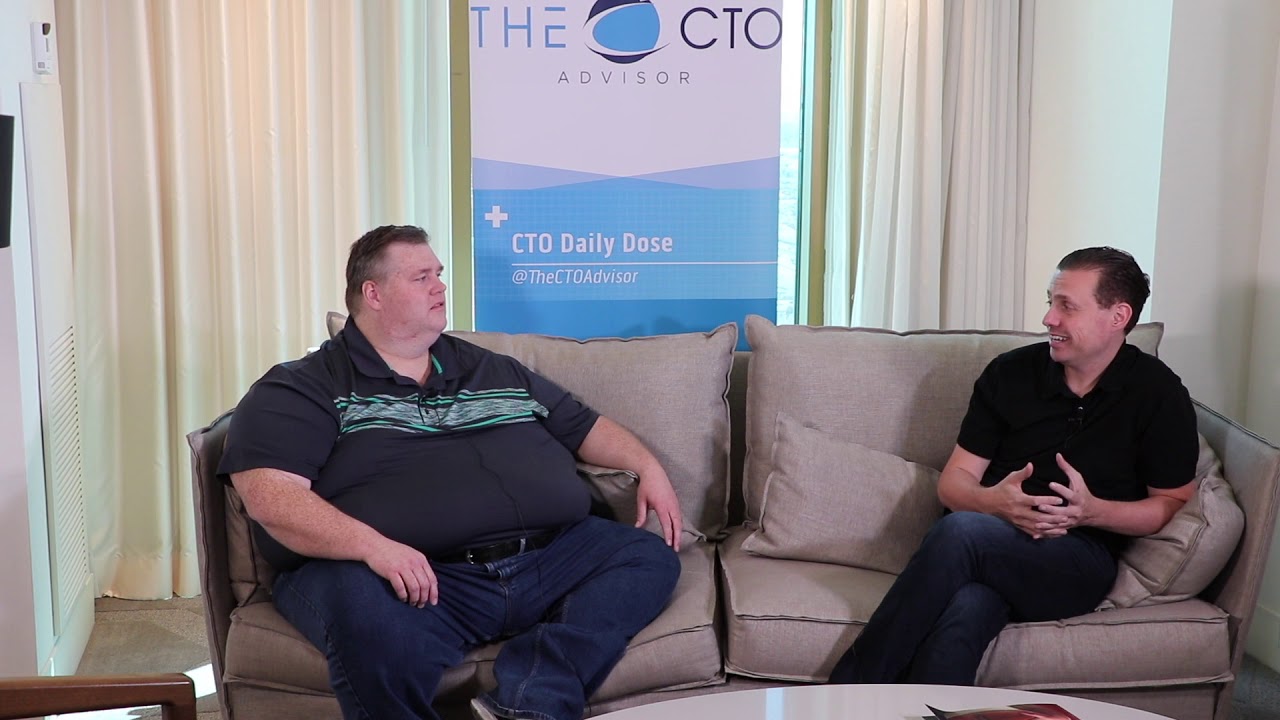
[Music] everybody welcome to the CTO advisor I'm here with a good friend of mine James waters James yourself hey I'm James waters su strategy at pivotal and friend of CTO advisor so what do you do no what does SVP a strategy actually do I I tend to do two things I work on a lot of things with our clients so I spend a lot of time traveling with our clients making sure we're doing the right thing that they're being successful with what we do and then
I you know try to help the company think about big new bets we could make it worked a lot on our recent container strategy and so here at vmworld there's a lot of talk about container so it's kind of fun for me to watch these things go from early ideas to more mass-market yeah so you mention containers and you know this is where VMworld it's been a lot of talk about containers yeah all over the place so if I look at what I'll call container adoption
you know we have doctor a couple years ago and all the stuff that led up to it but now it seems to all of you about container orchestration yeah and kubernetes yeah so where do your customers when you're talking your customers how do they feel about kubernetes are they doing it do they want to do it having trouble doing it yeah you know I think a great question about the history there is you know kind of sort of in a sort of peak docker hype there
was a moment where it was sort of casting itself is like just docker solved everything right and you know I used to take uncomfortable opinions with some people I was like hey it's kind of a laptop technology right like it really was developers on their laptop they loved that docker image they could put together their Python app with their Redis and their Postgres and their elasticsearch all in one little docker configuration their laptop they're like this is the greatest thing ever but that really didn't solve
for what you might call enterprise data center orchestration yeah and so I think kubernetes has now become the place that all those things from laptops migrated to in in the in the data center but in the same way you know kubernetes itself needs a lot of help to become a platform so it needs a lot of networking help I think that's why VM we're so big on this with NSX you can see them talking about that it needs security helps so you need to still need
to wrap virtual machines around it that's kind of one of the big things and what I think VMware has a nice bet here and it needs a day to write it's not like you put it down once and and forever and ever it's gone so it's just interesting to watch kind of what was a laptop phenomenon now getting closer and closer to enterprise reality if that makes any sense yeah so it sounds like there's lots of challenges yeah I think I like how honest Kelsey is
about this and Jo beta and the folks that really originated the kubernetes codebase they're like hey this is a kernel of a platform it and I think but what happens is the word gets so popular people start to assume it's just sort of a proven fact and so I but it's a lot of fun to help people have a good time on the ride I guess as I stand before the podcast customers a lot but they all wanted to talk about kubernetes or your kubernetes offering
or are they talking about other things with you I'll give you an example from this morning where I one thing that's really exciting about krubera is what customers are talking about is is fees that have been shipping on Prem are now starting to ship container native right and so one conversation this morning was a bank who said hey we're conservative but we have to have this for our quant is V that wants to come on Prem with us so you know when I think of things
like that I see a lot of people weren't a SAS offering yeah instead of those concepts and those is VES but I've never thought about where it would go if you still needed on Prem if your requirement is still on Prem yeah is that a big use case I think IPC use case probably I think there's a huge amount of on-premise software left and on Prem is fees I actually think is a really interesting frontier because the mega horizontal things like Google Docs and office 365
and Salesforce like we've we've figured out how to sass that right right but there's a really big long tail of applications that enterprises used and a lot of times we help them with our original platform so much with their traditional the apps that they built yeah but the pain was they're packaged on-premise yeah so like I'm super excited to see people saying like our app artifact is gonna come with programmatic infrastructure built into it it's all gonna be packaged for kubernetes yeah so I see a
lot of it so you've tried to deploy kubernetes and failed or we're successful what happens most of the time yeah I think there's there's there's been a learning curve where you know one other conversation I just had today just keeping it real like what would I really hear today was there was one one vendor that you know their philosophy on open source was let's support the old version and what kind of fork and support the old version right that's always something people want to do it
doesn't really work in the kubernetes world because the cloud providers and the kubernetes community keeps rolling forward on that and so it turned out that they're on prem app didn't work on the fork version so that reminds me a lot about OpenStack all right you know OpenStack they're constantly changing constantly tweaking yeah so many versions and it's so difficult right I had a team a customer and they literally tried to deploy OpenStack yeah these were really smart people yeah and they failed and when I saw
these really smart people fail yeah it would a deploy something that was a really challenge you know I I work for a company that's owned partially by Dell technology and so I'm a little biased right but my honest advice to anybody is I would say that fewer vendors and your private cloud stack today like sticking all the stuff to get this hard enough right and it's all starting to move faster and that's really where fewer vendors make sense because if you had two years to do
a project to glue it all together maybe you had a shot but when these open-source communities continue to move forward rapidly do DIY so it gets really hard so I'm excited when we can kind of come in and be like we'll give you a kubernetes dial tone with the full infrastructure stack because it's a lot of work otherwise I don't know I think I'm just agreeing with you there that's good because what I've seen in the industry and and I would say just straight talk a
little bit you know like OpenStack in general I don't think is seeing the growth curve of adoption Oh what are you seeing like I'm seeing like right OpenStack you know certain use cases yeah you know large service providers where they're really building and had the talent of it all yeah but I think in the enterprise I don't think I've seen much OpenStack adoption a few banks yeah they've really heavily invested in it yeah and that's kind of think what you have to do so I think
a lot of people I've heard compared kubernetes to open second complexity not so much in success or later but in complexity yeah and that's where I think because kubernetes is like half a developer API like here's my app artifact here's my rolling update and half an infrastructure API here are my networks here are my you know virtual machines or or at least nodes I'm I'm hopeful that it can have a bigger ecosystem because of all the developer impact these package things and what's happening there then
maybe some of the lower level stuff that where OpenStack was and to be fair my friend Josh Mackenzie help create OpenStack he always wanted to get it to be like a developer experience right eventually so yeah one of the things that when we start talking about kubernetes and docker is it changes things for developers but it also changes things for infrastructure so when you got to customers you know I don't like to say it like this but it's best way I can think of to say
it who usually ends up owning the platform that kubernetes becomes is that something that the developers usually own the infrastructure and how does that work I see that being a huge challenge for you know politics of a real enterprise all right it's there it exists and we have to deal with that that's a that's up as you said it's a human challenge and anything fix that I I haven't fixed all human challenges yet I think you me give me a couple lifetimes the thing that I
would say though is that I I think it makes sense to have an infrastructure platform team runs it run it I don't think developer teams running it makes a lot of sense just because like you know I was talking to one bank that was building a new digital initiative and I said look honestly the cognitive load I'd like to put on myself when I'm trying to do something else at the app level is as minimal as possible right my suits if I can just have something
that abstracts that for me and I can focus on how hard micro services are to stitch together I guess plenty yeah what are some of the challenges that I should be looking out for some of the questions that I should be asking myself yeah to think about before I just jump right in and try to do it the hard way I mean I've got three that are pretty universal to any kubernetes deployment on Prem especially or hybrid I like to just qualify everybody souped up on
it like yeah we're Cupertino they're chanting I just it's like okay can I ask you a couple questions when I was telling you about these the first one is you know how many times it come out a year because I meet teams that they're their enterprise process to get something to production takes them sometimes a year or a year and a half and so they end up about to take two prod a year and a half old version of kubernetes now there's also some vendors that
try to support the old version and they almost amplify that but go over to Stack Overflow and Google like your old version of kubernetes now and you'll see the ecosystem has moved on the other thing that kubernetes formerly only supports n minus 2 which means after nine months you're basically out of date yeah that's hard in the enterprise right all echo my my pivotal experiences updates come out always I mean there probably been one in the time we've probably well that's why it's a sweet spot
for us not not said like you know pitch our own book too hard but we were already managing like you know half a million in containers in production and enterprise and constantly updating the platform underneath them right so when we saw the ecosystem expansion potential the kubernetes yuccas you know community and the fact that it needed our cost and delivery ability we're like we can really help yeah and so that's the first question and oftentimes people don't even know it comes out four times a year
and that's just like the first brace where they're like oh yeah we better have a plan for that and and I know that these things matter to enterprises cuz like you'll see them go from no notebook to like they pull the notebook out and they start scribbling these down have to do I think they realize it's gonna affect them yeah right this isn't some pie-in-the-sky vendor feature like this is core fundamental 101 all right so that's question number one yes to the second question is a
little more nuanced which is like how many clusters are you gonna need and you know the example like Kelsey or some of the other folks talked about too is sometimes there's like a helmet art that wants access to the full root privileges so if you only have one giant cluster for your organization how do you do that like do you want to give everyone root right on the whole cluster on every node well so so that's a challenge that I've seen with Cloud Foundry yeah it's
cloud scale right yeah yeah cluster I would say for yeah I think it's actually technically 3 that's a big footprint yeah right if you if I presume that most of those are on vSphere yeah you know that's the lead that's and fully resilient cloud foundry has a fair number of you yeah right yeah and kubernetes I think what you want to be able to do is have essentially one boss in our world right or you can stand up multiple clusters of kubernetes inside of it versus
one big kubernetes cluster and everyone has to swim in the same permissions so we're talking to kubernetes cluster how would that translate to a vSphere cluster you could have n numbers on an in-store cluster and that's what we're trying to drive with VMware in our partnership is you should be able to programmatically deploy as many kubernetes clusters on a bestir cluster as you want expand shrink and update them ok and if we make that dial-tone boring and simple then people can get to adding value as
opposed to getting too bogged down so all right I really like the way you're thinking about that so third question yeah the third question is is your network ready for this and how mature as your Sdn and you know as you know what kubernetes I want to provision an ingress controller oftentimes the enterprise that means I just had to go talk to the f5 team yeah and I had to go explain that I want to add this thing to a cluster somewhere in kubernetes and that's
a whole back and forth right or is where some of the stuff VMware is doing with that SXT as a koreas cluster is deployed up pops an ingress controller programmatically so that's the difference between three weeks with an Ingrid you know if they did ticket or programmatic choose programmatic the same thing in terms of wiring networks into the clusters and between clusters again I don't think you want to do that and traditional all go file a ticket with a network team while I'm dynamically managing all
these containers how many how many your customers already have an SDN solution that's mature right I know we look we talk a lot about nsx yeah sounds like a great product but how many do it I always say that one of the number one use cases for NSX T is containers in general right and people doing kind of continuous delivery constant updates of environments is really driving in a sixty four containers that's that's what I hear it's kind of Co NS XT at least is Co
evolving right with this container ecosystem which i think is is promising but it is new for people like there's there's definitely it's a new journey okay so those are I think this started out as what we give to our infrastructure people yeah what would we say to developers who are looking and going down that journey yeah I think developers are a little more in tune to that because really we're trying to give them value so that they can help drive business value yeah but is there
they start looking at their container and that ecosystem what would you tell them yeah I think in an enterprise context the first thing I'd say is this sort of the developer experience in kubernetes there's not one opinionated one yeah like there's not one God API on top of kubernetes that all developer workflows resolve to I think all the core kubernetes contributors would say similar things we partnered with Google on a new one called K native which is optimized for functions and apps that essentially are wired
to respond to events and scale up and scale down based on events I think that's an exciting use case but at the same time I think what you want to do for developers just keep it as a more open ecosystem because there's a lot of innovation coming out right now I don't think you want to give your developers one you know kind of forked version that has one opinionated way of doing a developer workflow I think you want to take advantage of the community and there's
a lot of different Siddhi tools there spinnaker that now plugs into kubernetes we're working with we've works Alexis Richardson's company has a kid ops flow into kubernetes so I think it's a time of incredible innovation on the developer front within the creative community so Keith and I were talking to Nick Rockwell he's the CTO of the New York Times yeah about the people challenges in adopting any new technology and specifically from his perspective I think they almost skipped the container the container journey right they went
right from VMs they toyed with containers there's a podcast and we'll link to cool and then they just went they went serverless instead yeah right and they were doing some work with Kafka - yeah I remember these at times yeah so is I've always thought his containers just the next logical journey to serverless and then serverless the next logical journey - I don't know what yes right how do you feel about that is that I think one of the you know beautiful things that this philosopher
Vicki Stein said he said you know language is constantly evolving in the direction that we we we do new activities we get new language it's not like when we create a new word we throw another one out right it's not like oh hey we're saying this now let's throw that out and I think if you keep waiting for developer interfaces in computing to get smaller and fewer you're ignoring all the new utility that's happening it's like genuinely it's used a New York Times example running Kafka
on kubernetes is a perfectly legitimate and important use case like confluent is now coming out with a Kafka operator it's totally optimized for the kubernetes api as it exists and it doesn't need any fancy workflow on top of it you can't run Kafka on lambda like in a sense like that that doesn't make sense so I don't see the whole world going serverless quote unquote because you still need to run your data cluster somewhere at at the same time if all of your data looks like
a bunch of events on Kafka maybe you go with the surrealist framework like a native and you just respond to them as they come through you process them and you turn off that worker that node so I try not to reduce things down like I look at like as new utility happens we're learning new words but it very rarely has all boiled down to five things does that make any sense does it too wonky all right what is your Sun Microsystems rehearse until the day Oracle
bought them in the night yeah yeah so where did you start and how did you end up here do you have a pivotal moment in your career worried differently sure uh if you'll indulge my nostalgia the first thing I'd say is like I was incredibly privileged to work at Sun for eight years because it was kind of like a research organization and so it had the feel of an academic world where we spent a lot of time thinking with smart people you know we thought a
lot about what I t's a service what cloud what open-source would mean Sun as a company didn't end up monetizing all that a while ago yeah this is 2004 I was working on cloud and IT as a service thinking it Sun yeah so I've been fortunate to have like that long runway but we we kind of hit a point where we realized there wasn't a lot of value in the hardware itself anymore so the pivotal moment for me was when I left Sun I was like
I gotta find the software that makes all this distributed hardware valuable and I was lucky enough to kind of start on though what you now call the cloud native software journey there so I think just look at where values headed in your industry and if you can be a couple years ahead of that and learning you'll you'll be more ready for the challenges when they come my only alright I'm sense James thanks for your time again I'm mark May with the CTO advisor and yeah we'll
catch everybody later awesome great to be here hey guys


