
VMware Cloud in 3 mins
Transcript
>> Hey, how's it going? This is Keith Townsend from The CTO Advisor. This week is a VMworld Barcelona 2019, so and honor of that I'm going to try to explain Vmware's vSphere and the cloud strategy in three minutes or less. Let's get started. (whooshing) (dramatic music) All right, so we remember the big announcement with AWS. That's the premier solution, VMware Cloud on AWS. We have the recent announcement with Google Compute. And then we have the announcement with, which was now a couple years ago, the CloudSimple solution with Azure.
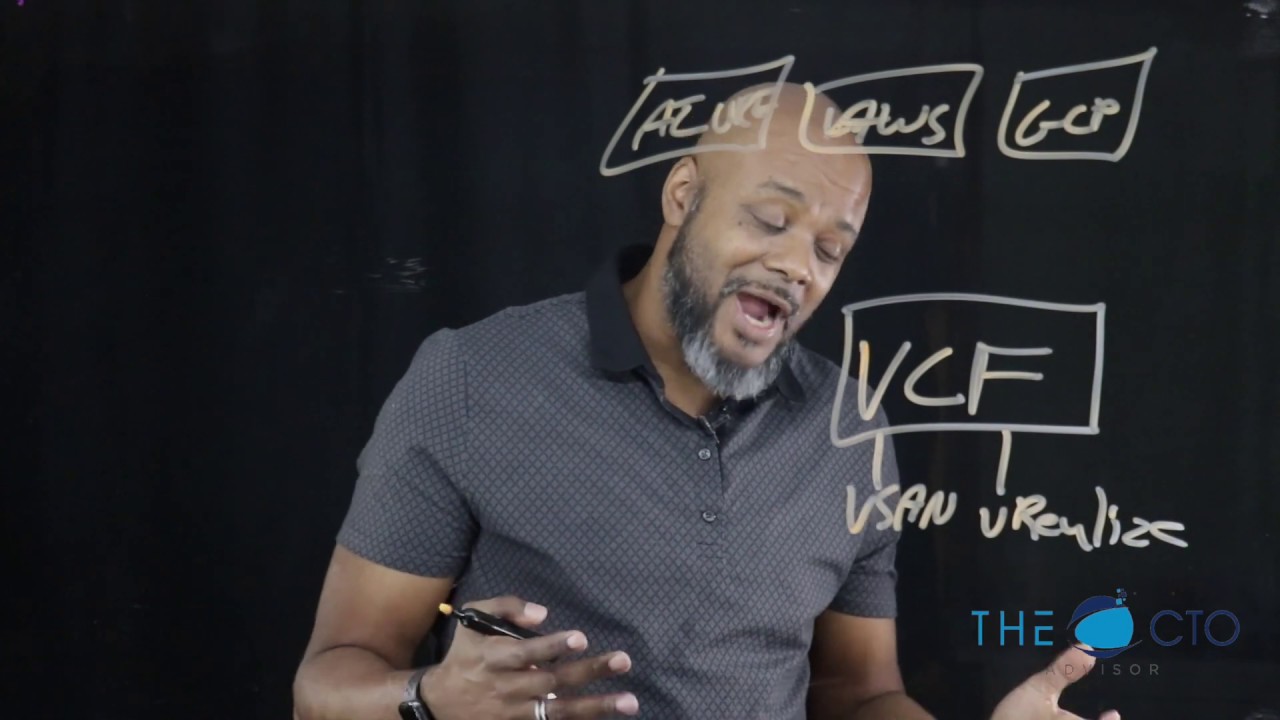
How are all these related? How is VMware doing all of this? Well, first, let's sidetrack and talk to VMworld back in, oh man, 2016, I think? And IBM and VMware announced a partnership based on VMware Cloud Foundation, VCF. I think we should start that conversation with VCF. VCF is basically VMware, vSan, the ACI solution, some vRealize components all in a, what is, VMware call, it's not a reference design, but let's, let's call it a reference design. Any cloud provider can adopt this design to deploy VMware Cloud Services and make a public cloud based on these core VMware technologies.
IBM, Rackspace, though the list goes all or on of all these B-type cloud providers, use VMware Cloud Foundation to provide you a vSphere experience. Consistent design across cloud providers, they can then add their value on top. How's that different than the Azure solution, the AWS solution, and the Google Compute solution? Well, the closest thing to this is the AWS solution. VMware Cloud on AWS, it is built on vSan, but they don't call it a VCloud Foundation. There's a lot of engineering that AWS and VMware did together to make VMware vSphere work inside of the AWS data center.
It is vSphere but components of vSphere look very different than your typical data center. How's that different? We did a video 2017 with Yanbing Li of VMware, she was at that time SVP of Storage and Availability at VMware and we talked about the drivers for vSan and AWS. AWS wrote drivers, EC2 drivers, for AWS. The EVS drivers for the NVMes actually does not present the raw NVMe drives to vSan but rather presents abstracted EVS storage so that VMware and AWS can collaborate and bring EVS to vSan storage to expand the solution.
So very integrated solution. This is, they get the bits to this super fast, it is the cloud and vSphere combine together. How's that different from what Azure and GCP are doing? Well, we did a video with CloudSimple. CloudSimple is the partner that provides the solution for Azure and GCP that's them taking the VMware's bits, deploying it inside of these data centers and managing that service on these two providers' behalves. And AWS, VMware is providing the service and Azure and Google Compute, CloudSimple was providing the service.
How's that different all around? Well, the important part to remember, VCF comes in kind of a tested set of binaries that across the board is kind of one product. And deployed and tested as a single product if VCF is a product or not. And Azure and Google Compute, CloudSimple gets the latest versions of vSphere, the actual bits, installs and manages it. None of these are in sync. Your VCF provider may be on different versions of vSphere or vRealize. Google Compute, Azure, all the same.
AWS, VMC on AWS will always be the cutting Air solution. So didn't we make three minutes? Probably not, but hopefully, this was a concise explanation of vSphere and the cloud. com is the website, blog. Talk to you next CTO.


