nVidia and NetApp Enabling the Next Data Scientists
Transcript
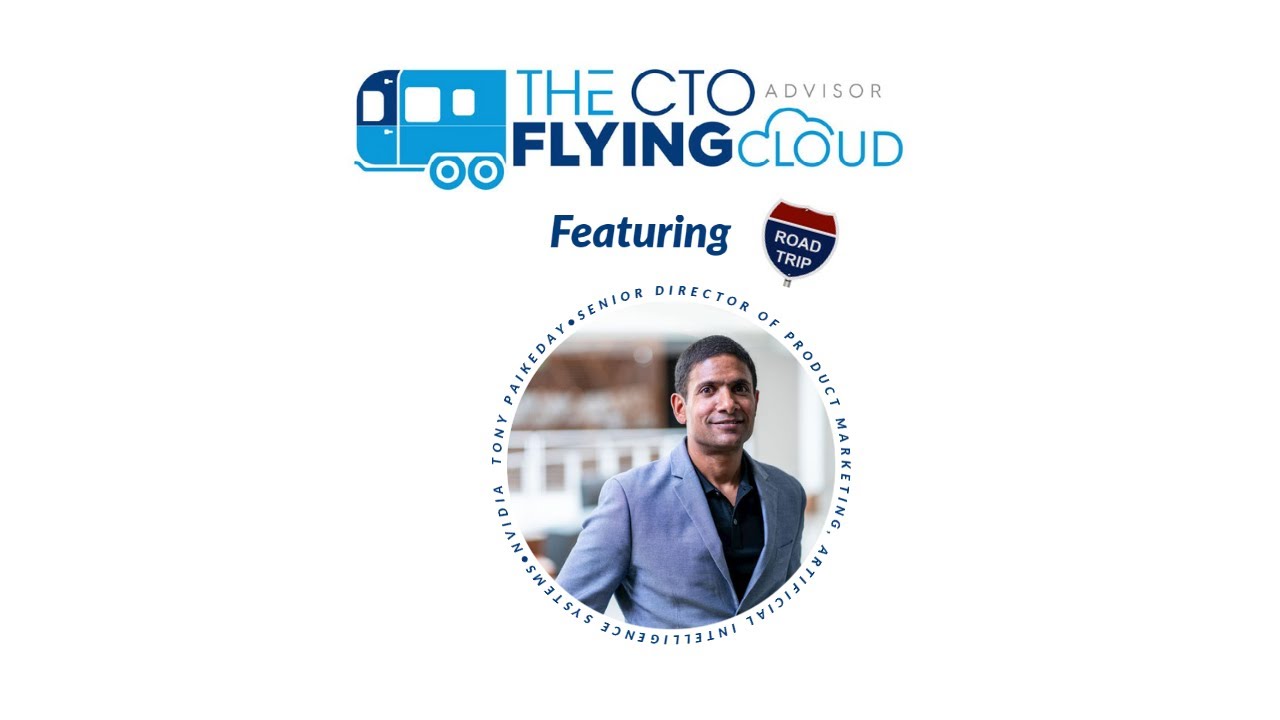
(upbeat rock music) (car ignition turning on) >> Hey, it's Keith Townsend. I'm the Principal of The CTO Advisor. Welcome back to The CTO Advisor Road Trip, CTO Dose. I'm joined today with Tony Paiekday. Senior Director of AI Systems at Nvidia. This is the first time we've had someone from Nvidia on the program. Tony, welcome to the program. >> Thank you. I'm excited to be here. Thanks for having me. >> So first off, I want to get this out the way, where are we at in the US?
We're in Georgia. Specifically at Georgia Tech. And I want to know, why did NetApp, who's sponsoring the video, why did they want us to meet in front of Georgia Tech? >> You know, I think actually Georgia Tech is a phenomenal choice. Of all the places we could be, in Atlanta especially, so much of the groundbreaking research in multiple domains like AI, machine learning, data science, computer science, so many different fields of engineering, Georgia Tech is at the forefront of all of this and NetApp and Nvidia have a very special relationship with Georgia Tech.
You know, they've been an early adopter of GPU-accelerated computing doing incredible work in the space of AI and computer science. They've even established a PhD program in Machine Learning. They're using our DGX A100 system to build curriculum and content around that to train, you know, this whole next generation of machine learning experts. People who are going to build incredible, innovative applications. And I think Georgia Tech is a great reminder for us of where so much of the innovation that eventually lands in enterprise begins in places like this, at the forefront of leading edge research.
>> So, we're mainly an enterprise channel. There are some academics that watch. And my enterprise audience is extremely familiar with Nvidia and both NetApp. However, when we think about the two together, we're thinking, okay, GPU-accelerated AI. Storage company. I think there's a connection, but talk to me about the relationship between Nvidia and NetApp. >> Yeah. It's a, it's a really important one. It's a great question, because if you think about AI, AI is essentially software that writes software.
We no longer live in a world of hard-coded logic. We have software that learns from data. Data is the source code of the modern enterprise. And so it's extremely important to have easy access to data, being able to prepare it, manipulate it and feed it into, you know, what we call the AI training discipline, if you will. How we build AI models that can deliver value to a business. If you think about the value of this to AI, it's extremely important to have easy access to data, mobility of data with accelerated computing infrastructure to be able to build these incredible models.
So you have NetApp that knows data, data management, data mobility technologies extremely well and Nvidia, accelerated computing, coming together such that data science teams in every enterprise can build incredible models much more easier than they would without. So our partnership is really about taking the best of our respective technologies and making it easier for enterprise IT to deliver platforms that bring together the worlds of data and accelerated computing. >> So make this real for me, because, again, I'm an enterprise guy. I've managed data centers for 20 plus years.
And when I think of AI, when I think about the heaviness of computing, I have my NetApp on-tap strategy where I can move data from the on-premises data center to the public cloud. But I have my GPU compute, which is pretty much, you know, move the data to the compute. How does Nvidia and NetApp make data portability in analyzing data, specifically using AI, real for the enterprise? >> Yeah. You know, what we've found is if you look at the life cycle of AI development, so often than not enterprises, a lot of businesses begin their journey in the cloud.
Easy access to resources, elasticity of resources, the ability to quickly build an experiment in what we call, kind of productive experimentation. But for most data science teams inside of an enterprise, eventually they start to introduce more complexity in their models to get better predictive accuracy in their algorithms. As their model complexity grows and their datasets start growing exponentially, they start fighting data gravity, namely a lot of time and effort is spent moving very large datasets from where they're created to where their compute resources lie.
And that can start to stifle the innovation cycle because you spend a lot of time worrying about whether you curated your "training run" correctly, and whether the results that you'll get maybe hours or days later is going to be right or not. So it helps to think of that as an inflection point where most enterprises, many enterprises, will now start to think about co-locating their computing infrastructure co-resident where the data is. We have a bumper sticker version of this called, "Train where your data lands" (Keith) Hm.
(Tony) Which means try to shrink the time and distance between the data lives and where you're going to act on it. So for that reason, if you think about our joint solutions with NetApp, like on-tap AI, they're designed to do exactly that. Put your data infrastructure in extremely tight proximity to your computing infrastructure, such that your data science teams can iterate really fast, run their datasets through a training regimen very quickly and get to that perfect model that delivers the highest accuracy for a known business problem sooner than you would otherwise.
>> Tony, I really appreciate you taking the time out of your schedule to come down all the way from Alpharetta, because (Tony laughs) while it's only 30 minutes away, we're in Atlanta traffic and 30 minutes away can be an hour, hour and a half away. (Keith) I really appreciate this conversation with Nvidia because I think it validates some of the conversations that we've had with NetApp. Whether it was with Greg Nierman talking about processing data at the edge, or if it was with the AI team at NetApp, talking about algorithm portability and, and containerizing your datasets alongside your algorithms to push from the edge to centralize compute.
Really interesting concepts. If you want to learn more about the NetApp or Nvidia relationship, follow the link below. Talk to you next CTO Advisor, CTO Dose.


