James Urquhart VMware Explore 2022 - What is VMware Tanzu
Transcript
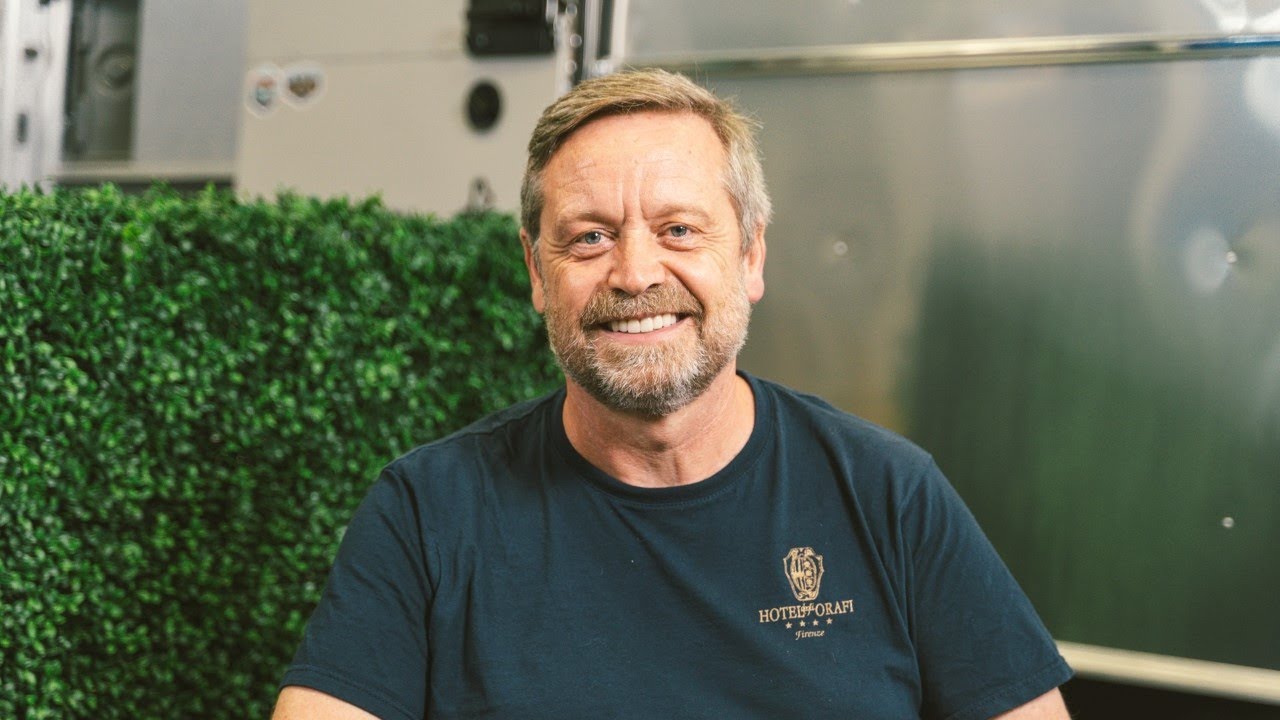
>> Host: Welcome to VMware Explore 2022 with the CTO Advisor Studio. Come on in and consume some content. >> Keith: So I'm trying to resist pounding the table 'cause I'm pretty excited about this conversation. We're having a great time interviewing the decision makers. The people who are helping mold the products of and services of their future for Enterprise IT here at VMware Explorer 2022. Moscone Center, San Francisco. The heart of San Francisco. I have with we James Urquhart, principal technologist for VMware Tanzu.
>> That's correct. >> So, let's clear the elephant in the room. I have a pretty good handle on it, but define VMware Tanzu. >> I mean Tanzu is actually a product line as opposed to a product. So that's the first thing to kind of clarify for everybody. And Tanzu is really kind of focused on the next generation of modern application development. And there's really two big pieces of that. So one, is you need the access to capacity that you need to run these applications.
And what's been happening over the last five, seven years, is this container concept. And then this idea of the Kubernetes API as the way of accessing the capacity you need to run those containers has really kind of been taking off. And so, the first thing we kind of look at is, wow, this is world out there now of organizations that are running managed or service utilities around the Kubernetes API. So, we offer that as well. Through TKO. And it's not just the Kubernetes API.
And the dial tone. But it's all this amazing management technology and capability around that. So things like observability, Tanzu Mission Control, which gives you a really great view of all of your estate. Your Kubernetes estate, and whether it's running in the public cloud. Running in your data center. Whatever it may be. And then also the kind of networking pieces and connectivity to vSphere. And then, of course, we've got the Kubernetes that runs out of vSphere as well. It makes it really easy.
So that's all the kind of infrastructure to support modern applications. And then the question really, there's a whole different conversation to be had with developers about then, how do you build and deliver those applications to that infrastructure? And that's really where I've been focused on. I've been focused on Tanzu application platform and Tanzu application service. Tanzu application service is the Cloud Foundry based offering. It extends that capability. Many, many enterprises out there, large enterprises, have large portfolios running on Cloud Foundry today through cancer application service.
And we're very proud of that. But it's a very opinionated direct direction to go in. " And so what we did was we stepped back, and looked at Kubernetes and what Kubernetes, sort of, native capabilities are. And said, what would we do to build a development environment that's more adaptable to different needs across the enterprise. And so we built an environment that you can consider it sort of a number of capabilities that our modular could be brought together. Things around supply chains.
And automating both the movement of things through a supply chain. And also, what I really like, is the checks and balances capability in the supply chain. And then, also, things for the developer and their developer day-to-day experience. So things like just automating deployment of work as you complete the work. Just automatically pushing that out so you can immediately see your changes. Being able to see live view of the performance and availability metrics and other things of your deployed code in a Kubernetes cluster.
A bunch of things along those lines that you can see directly in both the developer portal and the IDE that you're using. >> I want to break this into two different parts. This conversation into two different parts. I think that the parts that our developers facing. tazz and TAP. When VMware announced TAP, I believe it was last year, >> James: Well, they went GA in January, but we did talk about it last year. >> And some of the pushback, or confusion, it wasn't even pushback.
Even within the VMware Salesforce was, I'm like, oh like TAP the competitor to OpenShift. Versus tazz. And the response was, "Oh, Keith. " But it very much is what it is. As you just as described tazz. Is tazz basically the underlay for Cloud Foundry? >> No, that's the vice-versa. So Cloud Foundry is the open source project to build this sort of Twelve Factor app cloud, native app, development and deployment environment with all the bells and whistles taken care of.
Right. And then, we've extended that to be very enterprise friendly in terms of the technologies that we run into at enterprises, and the rules, and then the compliance and governance that enterprise runs in too. And so, you can really think of tazz as our Cloud Foundry distribution for the enterprise, with all the things that enterprise would expect in terms of support. In terms of extensibility, to the kinds of practices they have in their infrastructure. The ability to use Vms. The ability to use Bare-metal.
A number of other things that come into play there. >> So if I was a pivotal Cloud Foundry user, and I had PCF installed before, tazz would be my upgrade. >> That's almost all of our customers that were running on PCF are now running on tazz because it's essentially the rebranding. But we certainly haven't abandoned new development and new capabilities around that. It's got a full engineering, and roadmap. >> There's a prevalent Cloud Foundry community that very much believes in that Twelve Factor application development model.
There needs to be a vibrant community around that. And taaz is the product that stitches together the community for VMware. >> Yeah. And we have customers with over a hundred-thousand application instances, which are just units of deployment running in their data centers. With customers facing an critical internal, mission critical apps, today on tazz that are very, very happy with it and don't see a reason that they need to change. >> Tangent question. Around that there was some deep level integrations with hardware providers with that previous PCF Community when what used to be the Dell technology, or EMC family of technology companies.
Are those partnerships still in place? >> Yeah, I mean, I'm not directly involved in that but my understanding is that absolutely we still want to support these customers. We're very customer-centric. We want to support these customers with the technologies that they're used to it. So these things that they've come to rely on we absolutely keep them moving and keep them working in the right direction. We've even been working towards improving the ability of running in the public clouds as well.
So making it easier to deploy and operate tazz in the public clouds in addition to continuing to do the work that we've done in data center work as well. >> So let's walk from the high-level challenge to where TAP comes in and solves the high-level challenge and where there's, I think before we hit before where there's white space. When a CIO/CTO looks at a modern application development platform >> James: Right. >> and decides that they want that to be based on Kubernetes.
The problem with Kubernetes behind us, there's a box of LEGOs. Then on other side of us, there's a LEGO kit with directions on how to build the LEGOs. I can deviate in that kit. And with the box of Legos I can maybe even build what's in the kit. But I have the knowledge to build what's in the kit. So, when I think about Kubernetes and the ecosystem around cloud-native, I think of it as a box of LEGOs that I can build whatever I want but I better be a master builder in order to build that.
What is TAP, in relation to a box of LEGOs versus a a LEGO kit? >> Yeah, I mean really to use your analogy. And this is actually one of the philosophies that we brought very early in the development of TAP is the longevity of a platform is really dependent on its ability to adapt to the changing environment that the applications have to be built. Things they have to be built with. Ways they have to be built. Things they have to be built for.
Like environments they have to run in. And so, that adaptability really depends on the ability of being able to exchange out the different pieces and parts that are available. So we look at that Kubernetes ecosystem and say. We're looking at now what's the developer experience to. Not only. I should be really clear. It's not even thinking directly only about the individual developer. But the real problem comes into play with there's a ton of things that look at a developer and a team of developers trying to get an application built to deploy in an environment that they want to deploy to.
There's tons of that stuff out there. But we really started asking questions about, because we have these customers, is what about the company that has hundreds of development teams, that have thousands of applications that they have to deploy to hundreds or thousands of environments that they want to run in, across multiple providers of those environments. And so, when you start looking at the problem from that perspective, there are some technologies and practices that you want to automate and make available really easily. And among those are things like you want some solutions out of the box to build a standard web cloud web app.
And unSpring, right? Let's just start with that 'cause that's kind of our wheelhouse. And so you want to build a Spring web app and be able to get that deployed into any Kubernetes environment that you want to run it in. So there's a bunch of things that are involved in, okay, how do you do that? And how do you bring that into play? Things like, how do you build it? How do you package it? How do you test it?
How do you scan it for vulnerabilities and things like that. But you then want to be able to say, well even within that solution, people may want to Break Glass and either replace what you're doing for that. Well, for the scanning, with some other scanning tool. Or they may want to add something into that. Or they may have a process management already for doing that. But what they really want is the checks and balances at the end of that process that says are all these following conditions true before we allow it to move forward to go anywhere else.
Right? At the very least. And so that's, I think, the critical thing that TAP brings into play is. We're beginning to pull the ecosystem and the pieces together with a tried-and-true and tested way of these sort of large scale enterprise development shops. To be able to pull all this together, and have security be able to apply things to these hundreds of projects. To have operations be able to say, "Hey, for this environment we need the networking to be configured this way.
" And have all of that stuff be coordinated and brought together in one environment that understands how to bring that together. >> So if I were to think of it from a large car manufacturer perspective, GM, this is a T-top body. Buick can build one type of machine vehicle with it. Pontiac another. Chevy yet another. Cadillac yet another. Basic same underlay, but in each use case, each one of those manufacturers could deviate enough to cater to the market that they wanted to provide a solution towards >> Or to use your LEGO analogy.
You may want to build the Millennium Falcon, but this company wants to brand that Millennium Falcon a little. So they want to change the colors of some of the aspects of things that put a LEGO piece with their logo in the right place. And they may want to change, as it's being built, they may want to make sure that people are checking the quality of that along the way. Right? So in the same sort of way one organization may want to build that thing differently than another and add some things into it and be able to do some things differently in the way that they build it.
I think to the car analogy is interesting when you think of A-body cars versus. Or K-cars. >> Keith: Right. >> If you want a low-quality version of it. " But the companies that are going to take that platform are going to want to do something a little different. Maybe replace the engine with a bigger engine. Or change some of the body styling in some way. And in the world of path to production and the process to production. It really comes down to what are the elements of that path to production that have to be there ultimately for that application to be safely deployed and auditable and all the right things that need to be there.
And in the modern enterprise each team doesn't determine that for themselves. " Or, "We're responsible for vulnerabilities in terms of network access. Different things like that. And then you have operations teams that are responsible for different aspects of things as well. And what we've done with TAP is really think about the ways that those different teams can affect the ultimate path of production for a given workload moving through the process of getting ultimately to whatever production environments are being deployed to.
>> So last question, let's talk about white space. We mentioned that my previous conversation with VMware folks. You seem like you're trying to boil the ocean. Everything that you're trying to solve 'cause there's so many opportunities and so much to solve. Where are the white spaces? >> I think there are a lot of places that we have left to go. For instance, one area that I'm very interested in. I wrote a book about event-driven architectures. We could do things to make it a lot easier for people to not only deploy event-driven applications but to discover streams and to connect those streams together.
We could do a lot of things that would be a lot easier around machine learning and artificial intelligence applications. Both in terms of model building, and then using those models downstream. There's a lot of things that I always talk about. The fact that what we're building really with tap is, yeah, we're absolutely building a box of parts but we don't want to sell you a box of parts. We want to sell you solutions. So ultimately where VMware can go, and we haven't made any solid decisions that I can talk about here.
But we can go beyond just that. here's a Spring supply chain, to here's a HIPAA compliant supply chain. Or here's an automotive industry for on-car deployment builds supply chain. We have a lot of opportunities to build and deliver solutions. " We can do something a little different to make that tweak. >> Well, James, I really appreciate you picking out a time and I hope you're going to the VMware party 'cause they just announced them. >> James: Yeah. >> It's going to be a good party.
I'll be there at some point, tonight. But I think I'm going to go to dinner. I hope you enjoy the rest of VMware Explore 2022. We still have a whole day of coverage left for VMware Explore 2022. We're going to find out more about the CTO Advisor. com. You can follow me on Twitter @CTO advisor and I can relay any additional questions that you have for James 'cause my DMS are open and we can just join the conversation. Me and James are always having dynamic conversations.
We don't always agree. But >> James: I like that. >> that's that what makes them dynamic conversations Stay tuned for more coverage.


