Inside a Real AI Smart City Project | Town of Vail + HPE
Transcript
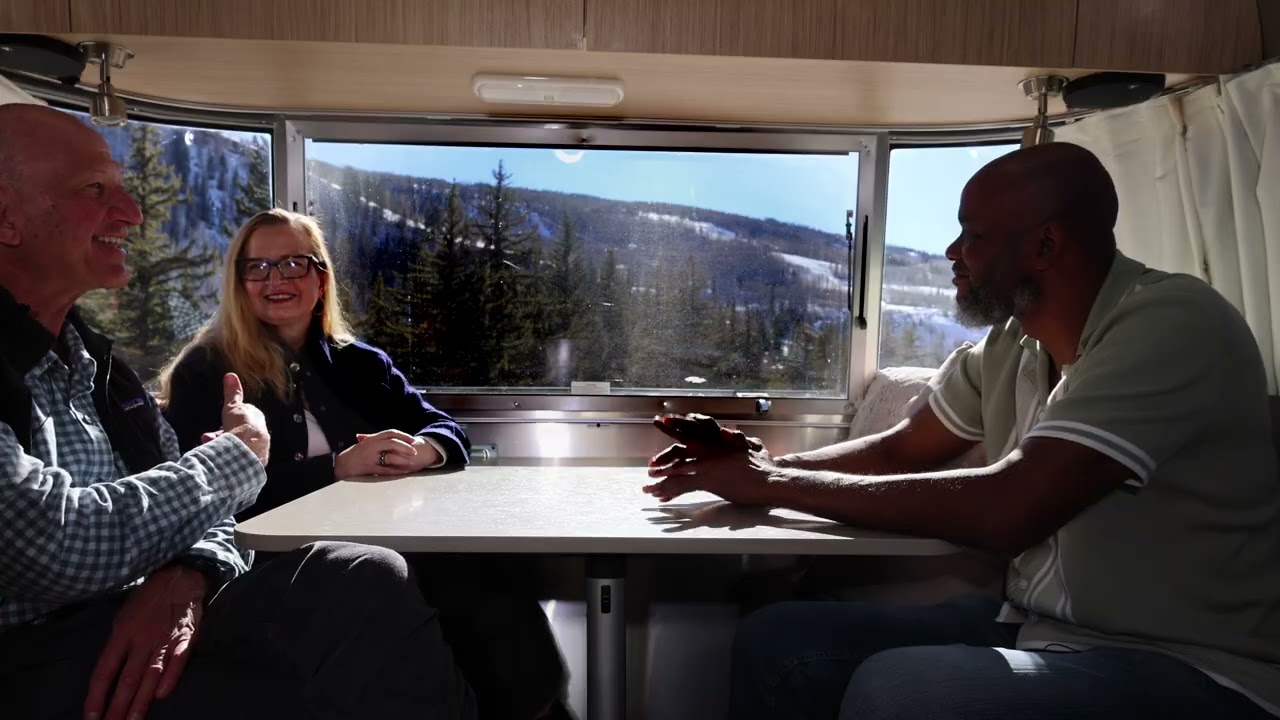
what I think has been innovative, and again, I'm not in your industry, but it's innovative in terms of dealing with traditional software developers, is we sat down like we're doing tomorrow in a conference room, and we had a discussion about what can AI do, and what are our needs, and we organically figured out what were the first four things we wanted to tackle. >> [music] >> We have with us again Robin Brown, VP of AI development HPE. You folks are sponsoring this portion of the CTO Advisor Road Trip, where we're traveling from Tennessee all the way to San Jose for a GTC, Nvidia's AI conference.
And we have the rare pleasure of interviewing not just uh executive, but a non-IT executive, a customer of HPE, Russell Forrest, town manager of the town of of Vail. Thanks for hosting us. >> Yeah. That glad welcome to Vail. You know what I should have here? >> I've driven far north here a few times, and it's uh you know, what through Wyoming is and is interesting is nice area, but man, the Vail Pass is beautiful, and your team has the responsibility to make sure that visitors, uh residents, all have this amazing experience that I've had.
First off, thanks for it for just an amazing job. >> You bet. Well, thank you, and again, it's a pleasure to have you here. So, the the first question I want to ask is the town of Vail is it where I would think of coming to to have a conversation about AI. You're not a AI expert, right? What made you undertake a AI project when stat after stat after stat is telling us that AI projects aren't having the ROI that executives expect.
What made you dip your toes in AI? >> Right. Well, um Town of Vail, we have big city expectations and big city issues, but we're still a a small town where we can get a lot done over the produce section in the grocery store. Um so, we have significant big expectations from our community and our customers. Um and we're always looking for creative ways to um do more with less. Um and we thought AI would be an interesting opportunity particularly to look at some of the mundane things that take an enormous amount of time for my team to do.
Looking at old records, property records, looking at uh old records related to finances. And it takes our people a lot of time just looking at sometimes handwritten, you know, documents from the 1960s. Um so, the thought was could we use AI to help us uh spend more time with our customers, which is our residents, our guests, our employees, and allow our employees to spend more time face-to-face with human beings and allow AI and computers to deal with messy data. And then we discovered through this wonderful partnership uh that really started over a couple of beers on what AI could do.
And so this has been a wonderful iterative learning process for us, which has been untraditional compared to dealing with other software vendors and even other AI vendors where they're really just looking at functions with individual silos. This turned into a discussion about how we can use dim information and data across multiple functions in the town of Vail. And again, it's just about a wonderful learning process with HPE and their partners. >> Wow, you know what? I've been around the block enough and I've worked with government entities enough.
No one the mission between government and and and corporate America is different. So it allows you to take a different lens, but the complexity of what you just said of re- removing the silos between organizations. That's hard enough to do without technology. And you add technology to the mix. What has been some of the encouraging or roadblocks to the removing of silos as you adopt these AI processes? >> Um I think first just having the creativity and imagination to think across just different functional lines and then the realization that uh laser fiche data, which is something, you know, it's it's just a format of storing information and data.
Uh and >> Everybody under 40 years old knows. >> Right. >> [laughter] >> And we use it across multiple departments. So being able to have AI access that, decipher it, um make sense of it, create get information out of data that has value across multiple departments. The other uh application that really caught our eye is we have cameras everywhere now. And you know, so we use cameras to monitor traffic, but then realizing we can use those same cameras to detect a fire, which is obviously a big issue on Western Colorado or you know, maybe to detect potholes and we're using the same technology um for multiple different purposes.
And then that application kind of extended on our buses. We have cameras on the outside and inside of our buses. So can our buses be rolling data collectors? So those are some of the things now from these the first four applications we're beginning to imagine with HPE. >> So I'm excited to get warm to the people and process side of change. But I I have to ask this question. It's It's a frank question. Uh with Robin sitting there, I'm going to ask why HPE?
Like HPE at the start of this project wasn't the brand with the billboards and the big commercials. How did you find HPE? >> Well, we're probably talking about computers and AI, but this is a story about people and it started with a couple beers uh with Luke and Kamiwaza uh inviting us and introducing us to Robin and her team and then Robin um seeing the opportunity and bringing a team to Vail where we sat around a conference table and we talked about what our issues were, what our ideas were uh and then also with HP and Robin's team sharing what AI could potentially do for us and then finding those connections between what technology could do and our needs.
>> So Robin, I'm going to pick with HPE for a little little bit. You have You folks have this unleash AI uh branding with uh folks like Luke at Kamiwaza who we've talked to many a times partnering with you to enable these types of of of projects from both a services and software perspective. But, one of the things that I find interesting is that HPE is not usually the one interfacing with a Russ. You folks have established relationships with CIOs. As you think of more traditional smart city projects, those are very much within the wheelhouse of who you reach out to.
Talk to me about the start of this conversation. How did it How did that go? >> Um well, I think part of it was that I had this idea that that we weren't a that traditional approach to smart city um the fact that I'm saying traditional approach to smart city really goes to the speed of AI. Um but that how people have traditionally approached smart city has been around that there are cameras and there's sensors and there's all of these things happening at the edge.
Which there are and there're fantastic things you can do there. But, I started getting really interested particularly in talking with Luke and with Kamiwaza there's so much more we could actually help unlock for cities that are miring them down and not letting them be smart. And so when we were talking about it and then to Russ's point, it's amazing the power of, you know, a cocktail napkin and a beer. Um the cuz you can always draw on those things. Thank goodness they still >> [laughter] >> the um that that really in starting to talk about it, it was in bringing those technologies together and in bringing a a more complex stack that includes like video for vision AI and ProHawk and and now Gambit for concierge and interface, but then Kamiwaza without a genetic glue on the back end.
But, making those things that like Russ and team didn't have to worry about. Um because that was for us to bring together. It was for us to help bring the technology part to it. Um leveraging the power of our Unleash AI ecosystem, bringing in the infrastructure from HPE perspective. But again, I think with the power that that I love and why I've loved this partnership is that it was truly what could we help Russ and the town solve with the type of technologies we could bring?
And let's bring those two things together and innovate together and and be on this journey to kind of redefine what smart city is to be like how do you start to break down the silos? How do you start to when you think about like emergency response or anything like that, like you have all of these departments and are there ways that we can help share data faster, easier, better? Um, you know, as we go even with like the discussion that Russ was highlighting around how do you deal with like the 811 request, you know, around like potholes, lights out, things like that.
Are there ways to make all of it easier so that you can just help run the town better? >> So, Russ, Ruben just broke down like the technical back end of everything that needs to happen to get to what you pointed out. But you inadvertently became the face of AI for the town. Like I'm I'm sure when you told your staff and your your customers that you were going to adopt AI, there had to be an assist of battling this fear, uncertainty, and doubt, FUD, around AI.
How did that communication work initially? >> Um, first it was very organic and I think it probably first starts we're a value-based organization, all about serving and supporting our community and one of our values is innovation. So, uh, we pride ourselves on being the very best we can as a public service provider and and one of the things that goes with that is um, embracing innovation where it works and where it could have value. But again, this was very organic in terms of really sitting down, learning what the capabilities of AI are could be, and then sharing with Robin and her team what our needs are.
Um so, I didn't sell that. It was really self-discovery with our team sitting around the table. So, it wasn't a hard sell I had to make to my team. They saw the opportunities, and now they're asking, "Hey, uh we did something really cool to improve our record keeping. Now, the next application could be we could do more with uh looking at financial records, uh and saving time, and potentially saving FTEs. So, now, which is wonderful from my perspective, I can kind of sit back and support this, every now and then be on camera, but It's It's It's my team kind of pushing Robin and and asking lots of what if questions.
So, the process uh that uh Robin and her team took, you know, really sold us because it was organic. It was not a hard sell. It was really trying to respond to real issues that we had. >> So, again, inadvertently, you're on the cutting edge of AI. Like, this is happening so quickly. Yeah. And failure is going to happen. Yeah. Like, you you're going to try some some stuff, and doesn't work, and you need to try something else.
Have you run into things where you just had to change course? >> Yeah. I mean, one great example is and we thought this was fascinating. When you come to a a place like Vail, you want to know understand, you know, where do the locals go? What do the locals do? How do I get that insight? I don't want to look like a tourist. I don't want to be 54 ft of rolling air free, but I don't want to look like I'm I'm a tourist.
>> [laughter] >> Exactly. You know, so my son's a son's a the instructor, and people want to know what's in his head. Um and so we had the idea of an avatar initially, you know, that could be an image and an an avatar people could interface with on a screen and look at. And then as we got into it, we realized, well, this technology isn't going to work the way we thought it was going to work. So we pivoted. Robin found a different vendor and now it's, you know, it's basically a texting and a voice message system and we call her Chloe.
And so I can call Chloe right now and this is her, you know, it's not who you know, it's where you can park in Vail. Um I can call Chloe right now and Chloe can tell me the best place to park in Vail and I can I can ask Chloe, is there any reggae going on in town tonight? And Chloe will tell me what my entertainment and special event options are and that's kind of mind-blowing. Um and we think that's the way of the future is instead of being on a website, you know, you can drive to Vail and coming over Vail Pass, hey, I'm 2 hours or an hour from Vail, where do I park?
What do I do? Um I like to eat vegan for lunch. Where do I go to lunch? >> So I find this fascinating that the basic concept is that you folks have a bunch of data and you like to talk to your data. Like this this wonderful computer science project or or concept that computers should be able to make it easier to use the data that you already have. And it sounds like your organization is on the cutting edge of figuring out what that means from a governance perspective.
The town transportation department, the towns commerce department all have this the access to the same underlying microfiche data, but one employee would have to search for information manually that could benefit another employee in another department, but it seems like this Unleash AI Unleash project has enabled you to kind of get this synergy that I don't know if you even expected it. >> I I didn't We didn't know if the benefits kind of going into this discussion until we really discovered it with Robin and our team.
Um so it's been an absolute discovery process and very organic. Um and again, you know, even some of the where data was and how hardware could be utilized in different ways wasn't fully appreciated before we had these conversations. >> Russ, I I I have to ask you this last sensitive question. There's a lot of fear and I think broken process around how to adopt the AI. >> Yeah. " But it What it sounds like what you folks did was more of "You know what?
" >> Yeah, in a place like Vail and like most municipalities, it's all about public service, which means, you know, where our people are interacting and answering questions with our guests, our residents, our employees, and we need more time for them to do that. So, when we went into this, you know, we began, once understanding the technology and some of the capabilities, formulating our goals, which was, "Man, if we can get our people spending more time with human beings, our customers, and less time dealing with messy data, that's a win.
The other part of that, too, in in the same breath is if we can get our people doing higher-level work and less mundane work, they're happier at work. >> Wow, there's this wild concept that AI actually brings people together. Who would have thought? >> Yeah. >> Really appreciate you two stopping by the CTO Advisor Studios. Robin, any last comments you want to share with the audience? >> I think one of the things that has helped this be successful and and and continuing is that we we approached it like a partnership and really a joint journey together.
And that we're all learning as part of it. Um where the value how to deal with the messy data. Um that we're able to very successfully help deal with messy data. Um but it's really treating it as an innovation partnership that you know, just by listening, I think we've been able to to really be able to focus our efforts on where can we get the best ROI in working with the town to be able to help drive their mission forward. And and to me, that's in the end why we're doing this.
>> I'm glad you two have found this partnership. I think this have been great example for I think enterprise IT and all the smart city projects of how collaboration should look like. What it should uh how it should function, how communications like a lot of great We even wrote a paper on how this is a model for AI for AI infrastructure framework. So, I think good stuff is already coming out of this. com. I'll provide links to the town of Vail and some of the cool stuff that they're doing as well as HPE's AI on lease program.
Thanks for tuning in. Uh see you folks in GTC or at GTC in San Jose 1,300 miles later.


