HPE & Google Anthos Kubernetes Partnership - HPE Discover 2019
Transcript
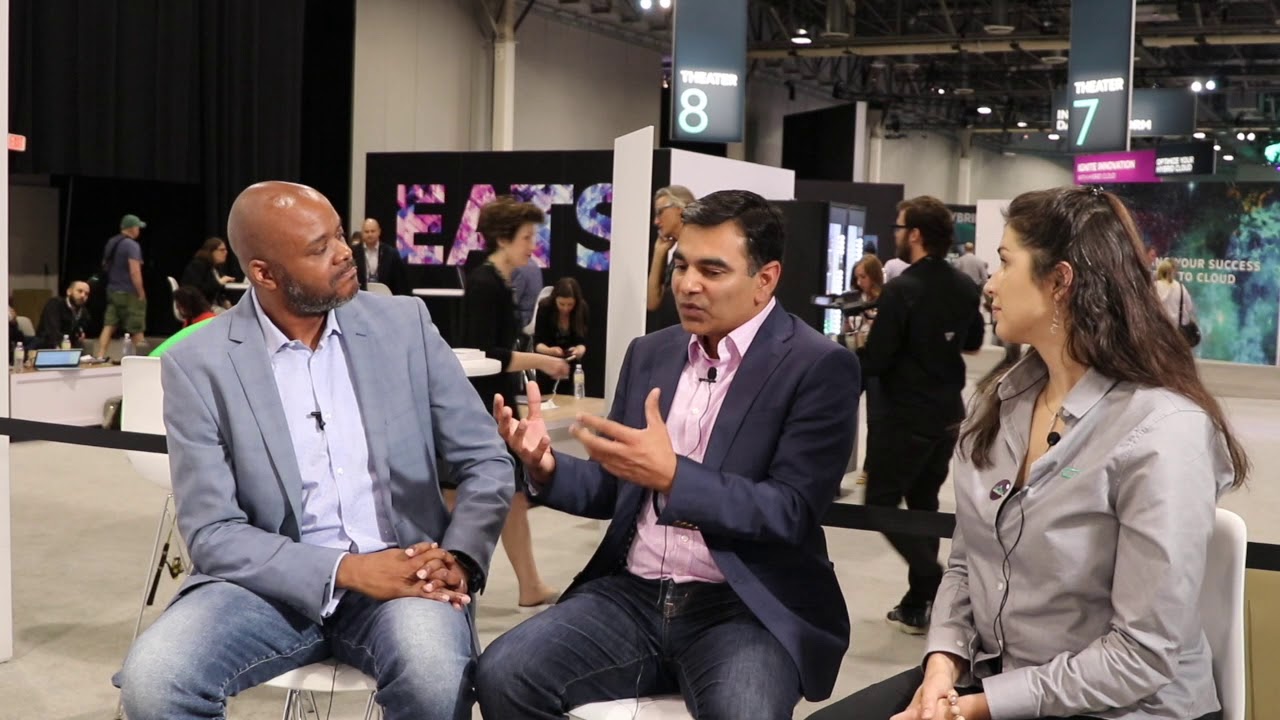
[Music] hey guys going to ski thousand from the CTO advisor and I'm joined with two special guests from HPE they first thanks HPE for sponsoring the CTO dose at Discovery 2019 in beautiful Las Vegas Ashish and Diane you guys have big announcements from the show first off the sheath how long you been at HPE in your title so I'm Ashish Prakash I am the BBN GM for the Cloud Data Services part of the business is part of HP storage I've been at HP two and a
half years and I got to HP via the new book storage acquisition I joined in humble about six and a half years ago yeah the network there are some exciting storage news now that my storage guys tackle on that but great acquisition by HP did I am my name is Diane Gonzales and I also like she started out at nimble storage I am his technical marketing engineer for Cloud Data Services so I do whatever he tells me to do yeah you know we're being recorded right
yes so first off we're not here to talk about storage in the traditional sense sure we're gonna talk about storage but we're going to talk about storage in the form of the partnership that you guys announced with Google what's the elevator pitch what what have you guys announced with Google so the key thing is it is who a hybrid and multi-cloud solution for containerized workloads that's groundbreaking and industry-leading there's nobody else that can do that the partnership offers a solution to customers that have some of
the infrastructure running on-premises some of it could be running in any cloud HPE provides the data plane for that with the most origin clients servers on-premises and cloud volumes of the cloud Antos which is a collection and portfolio of services that Google provides the container orchestration provides the control plane for it so customers can get the same experience whether they are deploying any infrastructure on Prem or in the public lab and across multiple plans so you've kind of struck a nerve in a conversation I've been
having throughout the rest of the show like this term multi cloud has been extremely bundle up to this point and I'm trying to draw a line in the sand and say multi cloud isn't about necessarily managing workloads from one cloud provider to another cloud provider but accessing data from multiple cloud providers you know we talked about an earlier session managing data and the challenges of managing data across clouds if you have data in a SAS provider or in the multi at your data center and a
multiple is providers managing workloads is a challenge but managing data is the biggest challenge so you know what what are some of the problems you're solving around data management with the solution exactly right key that the data has gravity and to move it and copy it around cost time and money applications and workloads require access to that data for the appropriate lifecycle of that later with the appropriate essays so if it's being actively accessed by any workload you need low latency the idea of multi cloud
like you point out is being able to use the best of green applications across cloud providers without with access to the data simultaneously and in real time without having to copy it in and out without having to pay egress masks and extend that to on-premises and private cloud or to coalos and you truly have a hybrid cloud story in the broadest sense I mean he hit the nail on the head to bring it down to the kind of technical and cost level what we're really talking
about is egress right it's not just egress but the challenge and time and moving the data and it's usually copied across the internet so there's a security problem there as well and we addressed that we addressed that because we don't have to move the data we can actually present it across all the clouds the only time we move the data is when we're moving it from on premises obviously to the cloud and we do that seamlessly and securely through our built-in replication so again we provide
that data path so let's talk about that a little bit so you guys come from nimble I get all this cool data analytics from my nimble appliances HPE just announced the new tier zero solution with nimble integrated in it and more importantly all the rage expecting when you talk about clouds around HCI has announced D HCI when it comes to the ability to have nimble foul services data analytics on an HDI format what if I want my the foundation of my cloud structure to be based
off this consistent view of data so I think a lot of the applications that use and consume storage and data management like Sara Lee it's about managing the data what do we mean by that the ability to provide a consistent set of services from provisioning snapshots and backup rapid cloning to be able to take point-in-time copies of it and present them recover a recovery of it replication with encryption securely write bidirectionally in an efficient way it's about efficiency and providing that rich data management suite and
capabilities and exposing it in the same way whether you're running in the public cloud or on and when you talk about DHT onyx as we brought a ban post right where DHT I in particular fits in nicely with the anthro solution it's a validated design for running the GK on Prem so component of anthos is powered by kubernetes it's the google kubernetes engine on premises that's going to be running on d HCI so now imagine this right we've got the data plane that we talked about
the ability to move the data seamlessly from on-premises to the cloud we now have this converged solution tightly coupled where I can scale out my capacity or my compute as needed but here's the key it's running kubernetes which means I'm not building cloud native on Prem in the same space that I have my legacy applications so I can take these legacy applications I can refactor them rebuild them cloud native on-prem and then with the management features that we bring to the table with our cloud volumes
integration I can then move them to the cloud move them to any cloud including the staple data that's attached to those workloads so let's talk about a lot of information on the data plain understand the data plane but let's talk about the control plane what if I will like the Google control control plane and I want my developers to use the kubernetes api as envisioned by google or provided by google how do I do that on Prem excellent exactly right the point is solution because what
we've actually done is all of the storage management the end user doesn't see that they're working through the native Google control point for the application stack whenever they're building or they're composing an application as code right there they're essentially building what's called a gamal maybe a little technical here but it's essentially a bunch of text and that text has got a lot of definitions and that's what calls those API is that that integration is what handles all of the storage did a data management but to
the developer they're just using kubernetes they don't see in the little raid they don't see cloud forms all they see is their development interface and it's the same on print it's the same in the class it's the same in any cloud while and Antonio started out the keynote yesterday by seeing cloudless I don't know if there's anything cloudless about that announcement if people want to find out more about this partnership where do they go so we've got a few blogs of course after the announcement and
we've got some validated designs Dan's put together some excellent demos that showcase these in specific use cases around hybrids see icd pipelines multi-cloud see icd pipelines hybrid cloud dr and being able to move workloads around so by the way the solution works for containerized workflows as well as virtualized workloads particularly with vmware v bolts with DHC i and cloud volumes a very comprehensive solution so we have a series of blog posts videos we'll be doing some social medias I think that's the announcement was the first
thing is we will follow it up with more and more detail on both Google side and our side as we get reference accounts and reference customers will do case studies in point those are excited about this journey forward Google there have been a great partner to work with technically and on the go-to-market side and you know I think the cultures of the two companies are really really close and the working relationships we have an a technical level in the business level the shishun Diane I really
appreciate you guys coming on to the CTO dose again we thank HPE for sponsoring this episode with CTO dose you want to know learn more about the CTO visor you can visit us on the web the CTO visor com you can find more CTO dose videos by subscribing to this YouTube channel or linkedin channel or again going to the CTO visor DICOM talking next CTO dose thank you very much kids thank you so much


