Google Cloud VMware Engine - Hot Take
Transcript
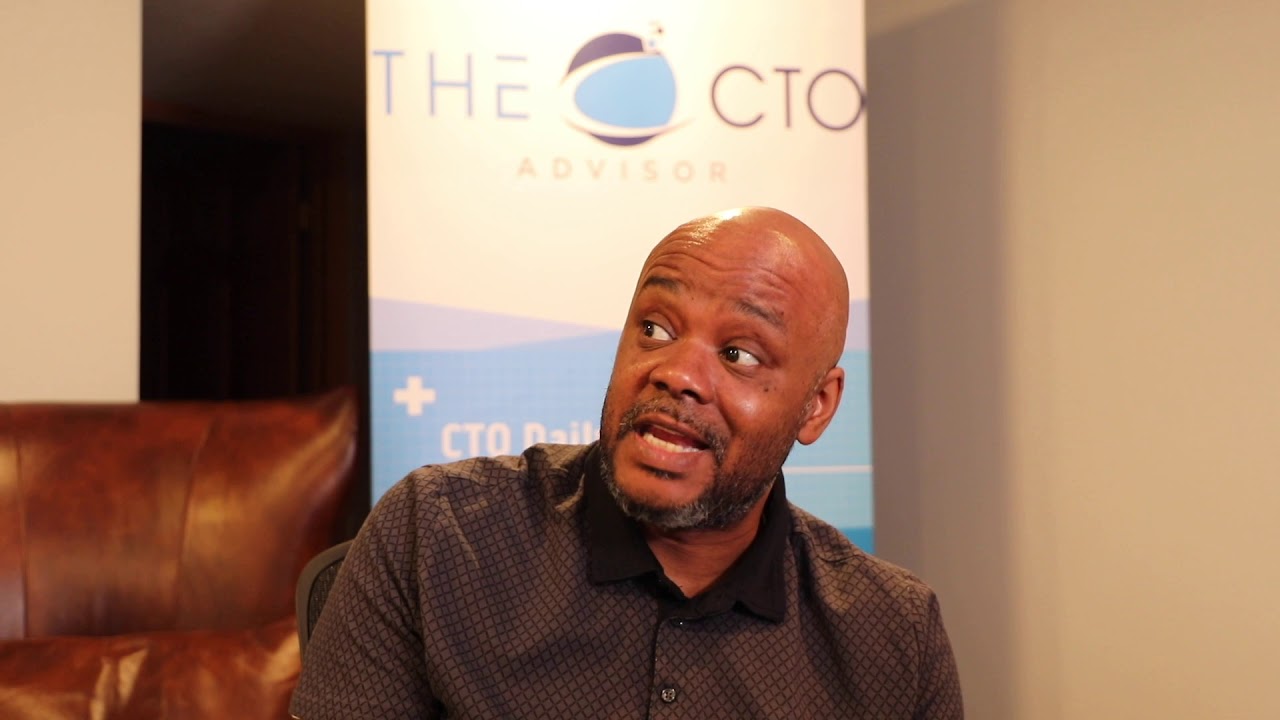
>> Hey, how's it going? Keith Townsend from the CTO Advisor. We're going to talk Google VMware Engine. What the heck is it? I found out that last week at Tech Field Day 21, first off, COVID-19 threw a monkey wrench in Tech Field Day. We, me and 11 other influencers, were to fly to the Googleplex, and hear Google present on their acquisition of CloudSimple, and COVID-19 happened. So we ended up doing this virtually, and I've done plenty of Tech Field Day events.
It went okay, but a mountain of information I'm hoping to share with you in this Hot Take. First off, what is Google VMware Engine. It is the renamed platform for a company that Google bought, called CloudSimple. If you remember at VMworld 2019, Pat Gelsinger got up on stage and announced that VMware vSphere is available across all the major cloud providers. VMC on AWS, VMware Cloud on AWS, for the AWS platform, VMware Resource Services on Azure, and VMware's CloudSimple on Google. Google went and bought the farm when it comes to CloudSimple.
CloudSimple provided a solution inside of Azure for a vSphere solution. There's a competing solution, but I think the most well known solution is the CloudSimple solution, and they had started to work with Google to release a version, based off of VMware Cloud Foundation within Google Compute platform. So what's the difference between VCF, and CloudSimple, and VMware Cloud on AWS? Well, we learned all of this at Tech Field Day 21. Well, indirectly. They didn't talk about VMC on AWS by name, but we talked about competitive solutions, and a competitive solution is VMC on AWS.
First off, VMC on AWS is VMware premiere vSphere partner for the public cloud. They get the bits first, they get all the engineering resources. To give you an example of the might of those engineering resources, VMware and AWS worked out a system in which EBS, Elastic Block Storage, the basic building block for storage in AWS will be presented to vSAN, not via the local NVME and spanning drives inside of the i3 instances that make up VMC on AWS, but via an abstraction layer that AWS wrote, basically drivers, for vSAN that abstracts away the underlying hardware so AWS can present any EBS storage to VMware vSAN, and VMware can take it from there, and build your vSAN cluster.
Google and VMware don't have that cool solution going on. So why should you even consider Google VMware Engine, which is really hard to say, by the way, GVE, we'll just say GVE, why should you consider GVE over VMC on AWS, if you like those acronyms? It is a different solution, actually. GVE is taking the VMware Cloud foundation base, which allows any cloud provider, whether it's one of the major cloud providers, or IBM, Oracle, or any of them work, vCloud partner. You can take the basic building blocks of the VMware Cloud, which includes vRealize, VMware vSphere, NSX-T, and of course vSAN.
You can take all those components, and build a cloud-based vSphere service, and offer vSphere up to customers. You don't have to be a mega cloud provider, you can be the CTO Advisor who just opened a data center, you want to provide VMware as a service. I can take this VCF platform, and use that to resell services. But this is Google, and that's not all their going to do. They're going to do it at Google scale. One of the things I found interesting is that the Google Cloud team kind of announced this CloudSimple team is now the face of Google Enterprise Cloud Solutions.
They understand the enterprise, and I think they show this in how they're approaching, giving VMware administrators and architects the keys to VCF as it's run in Google Cloud. Instead of kind of hiding the underlay completely away from customers, like they do on VMC on AWS. I don't get administrative rights to the actual vSphere host. I can't install, another Tech Field Day presenter, Zerto, directly onto the Minix, directly onto the vSphere host. That direct access to the vSphere host is abstracted away from me, I have to buy into a service.
This created some problems early on for VMC on AWS. I would take my backup software, and my DR software, third party management tools, try to deploy them in VMC on AWS, and they just didn't work. Even some of VMware's own products didn't initially work in VMC on AWS. In theory, GVE, Google VMware Engine, won't have that problem because they're giving you the keys, so to speak, to the host. You're getting a higher level of access, where you can actually install any supported piece of software into your vSphere environment.
So you want to do Zerto replication from your on-prem solution to your Google public cloud. VMware host, you can do that. If you want to mount NFS volumes directly from NetApp's Cloud Volume Service, deployed in Google Cloud, you can do that. The latency would be pretty bad, but if your VMs don't need that, if your applications don't need low latency, you can provision more storage. You can use it as a backup target, as an analytics target. You can do some type of storage tiering.
You can build solutions that you want to, bare metal, basically, with VCF and GVE that you can't necessarily do in VMC on AWS. It is a horses for courses piece. What are some of the other disadvantages to this approach? I think one of the biggest ones is the lack of integration, this engineering relationship. The AWS console, and the VMware on AWS solution is starting to become more and more integrated. I can do things from my AWS console that directly impact my VMC on AWS environment.
What's the counter-argument for Google's solution? Well, there's Anthos. Microsoft has Azure Stack, the ability to run Azure in your on-premises data center. Google has Anthos, the ability to run their Kubernetes distribution controlled by Google's Cloud Control Plane on-premises, on your vSphere host. You can extend that environment into the public cloud. So you have this inception piece, where I'm running Anthos on-premises, and I'm also running Anthos off-prem in the public cloud on a vSphere host. Why would I want to do that?
Well then we're getting into, kind of, this argument of oversubscription, and all the advantages of on-prem billing that I don't get in public cloud. We start to get into that mix that we talked about earlier on the channel. So my high-level thoughts: really cool stuff. I can still use VMware HCX to extend my NSX-T environment from my on-premises solution into Google's GVE solution. All of these feature that AWS sells about extending my VMware operations model into public cloud, I'm more or less with the Google solution, once it's released.
One last thing, as you're looking at vSphere 7, what about vSphere 7? VMC on AWS will get vSphere 7 before all of the VCF providers. The disadvantage of VCF is it's not the latest and greatest, every two or three month release cycle that AWS and VMware have come to. You're going to get the bits in your public cloud instance in Google, the same time that everyone else gets the VCF bits. So slower innovation, some customers may not necessarily care about that.
If you are strongly inclined to use Google's other services. I'd love to know what you think. Does this whole thing have legs? Running vSphere and public cloud, what does AWS, Google, Azure see that I'm not seeing on Twitter. All of my Twitter friends are kind of scratching their head to why does this matter. It obviously does, because each cloud provider is continuing to make an investment. I'd love to hear from you on Twitter. @CTOAdvisor is the Twitter handle.
com is the website. Talk to you next CTO dose.