Giving your IT career the 1, 2 punch
Transcript
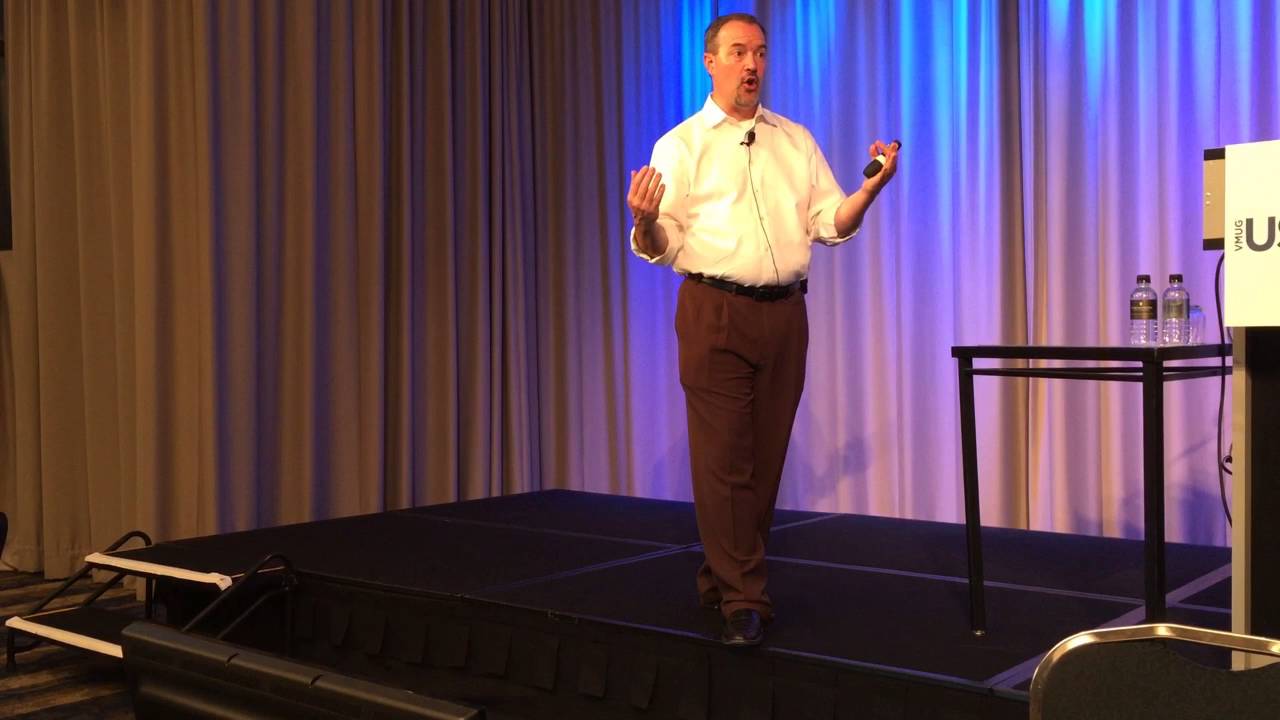
well awesome I'm I'm so excited that you guys are having a good uh a good uh day so far here um I'm really excited to be able to present with with Keith so Keith s your hand up there so bringing all right right Keith and I are gonna gonna tag team this session which is why we called it the one two punch because we thought it'd be kind of nice to you know both us get up here we're not going to punch anyone so don't don't
worry about that um but what we are going to do is we're going to take a look at kind of uh taking your career up a notch but from two different perspectives right I'm going to stand a few minutes talking about for from the tech Tech perspective but I want to be very very clear and let you know that it's for it professionals and and Keith you let me know I think you agree here for it professionals it is increasingly becoming not only about the technology
it is becoming also about how you tie it to the business absolutely you agree with that okay hey guys can you uh make him live too because he may be chiming in while I'm talking okay very go thank you uh so you know it's fine and great to look at technology from a technical perspective and it's important that we as technologists that we understand where these things fit and if they fit into what we're trying to accomplish but it is just as important that we look
at this from a business perspective because in the end what we do as technologist is really all about enabling the businesses to do what they're trying to do right unless you work for a software company the software and the stuff that we do that is not the end goal the end goal is what it is we're trying to accomplish making which Widgets or serving customers or whatever the case may be right so uh just want to kind of preface that real quick again my name Scott
low uh I gave an introduction this morning in the in the Keynotes so a lot of that's you know repetitive yeah yeah blah BL okay great uh once again I'll reiterate uh please contribute um we do have prizes to give away somewhere in here who do you know where they they're somewhere we have them we will figure that out okay but we have them yeah we have somewhere to give away so interaction is is encouraged feel free to ask questions provide feedback share your experience or
your or your Viewpoint right um once again feel free to participate socially uh take pictures post tweets Facebook updates Instagram photos Snapchat you know whatever whatever you know float your boat uh the hashtag or hash Sydney bmug or bmug Sydney if you're using Twitter and again out of courtesy for us please do silence your mobile devices although you're more than welcome to to continue to use them while we are going if I take photos what if you take photos yeah sure that's fine yeah no worries
if the shutter noise gets too loud we'll let you know so uh all right so with that um who in here is being asked to do less with more no no read it read it carefully who in here is being asked to do less with more one person okay you and I are going to talk later um no see the reality is we're not being asked to do less with more our companies do not come to us and say you know um I know the it
budget was kind of tight last year so this coming year we're going to double that for you and I know and I I know hi head count was a little was a little slick so just just go hire a bunch of people don't worry about the head count you know it doesn't matter right and you know you've been working a lot of hours so just don't worry about that we're going to cut that back to 35 hours a week you that's not happening right I mean
it's just it's not happening join that company yeah exactly that's what I'm saying right that sounds great but just not happening uh the reality is that it's the flip side we're being asked to do more with less we're asked to be more efficient more effective right to deliver results more quickly and to De deliver more results than what we were delivering already that's the nature of how the industry is moving and as a result in order for us to continue to remain effective and relevant in
this industry we have to evolve along with the demands of the industry right and so I'm going to do in the first part of this section or the first section of this presentation rather is look at what I believe um would be relevant for you as a technologist from a from a technical perspective to pay attention to okay and then I'm going to hand it off to Keith in a few minutes and he's going to share uh perspectives around that from a business perspective right because
again this isn't just about the technology it's also about the business and so I want I want I want you guys to really note that like okay I'm going to be talking technology but this is not the end of the discussion it's barely the beginning of the discussion so the key thing for these Technologies as I launch into them right is that the real value for us as it professionals is about moving higher in the stack right um it's about efficiency it's about consistency it's about
adding value to your business and and doing repetitive tasks is doesn't add value like anybody can click buttons anybody can be taught to type commands Okay that's not where the value really lies for your business the value realizing for business is how can you help your business use these Technologies to become or to be faster in the market more cost- effective than their competitors offering more value to customers than other companies in the same Market space okay so as I talk about these Technologies it's not
just because you know there's a lot of hype usually there's a lot of TR usually there's a there's a kernel of Truth in all the hype right it just takes us some time to clear all the hype away before we begin to realize what that kernel of Truth is and how we can really apply that kernel of Truth okay so I've picked out um I don't know three or four I don't remember how many key technology areas that I want to talk about real quick okay
so uh first containers and container orchestration tools I mentioned these in the in the keynote okay it's not just Docker want you guys understand when we talk about containers Docker is the darling of the container world right now but there are alternatives and these Alternatives function differently than Dockers so when when somebody says to you hey you should be using containers first of all take a step back and say okay what are they trying to tell me do they really know what they're talking about or
are they blown smoke right and second what form of container technology makes the most sense for me Docker behaves very differently than say an lxc and if you don't know or understand those differences then you may not recognize that lxc may be more applicable in your environment than Docker might be or vice versa okay um we also have rkt AKA rocket from coreos and or and or if you're a Windows shopping talking about Windows containers and hyperv containers okay um which will be showing up last
I heard in server 2016 okay so those may also be applicable to you it's about finding out what the right idea is there's also um in addition to Containers there's also all these container orchestration tools and if you're in the docker World okay again recognizing that's just one subset of the container world that we have Docker swarm Docker machine Docker compose uh which help you with clustering Docker engines um with managing virtual machines to run Docker engines on and to orchestrate multicontainer applications which is what
Docker most respect question here okay so the question was around uh MOS um and the commercial variation of mos MOS sphere um I didn't include MOS because although MOS is heavily associated with container orchestration it's really more of a scheduler than anything else right and the Frameworks on top of mos are what you would use to then apply work so you could you could be using MOS to schedule vir machines or you can be using MOS to schedule bar metal workloads or you using M to
schedule containers on the underlying resource it's a resource manager and resource scheduler that being said yes it is it is getting increasing traction and you see it used heavily the problem I have with msos is that MOS is still really really early like you know .17 or 0.20 in the release and as such there are still a lot of places where you can get cut um kubernetes Docker are becoming more mature especially in the Enterprise space there are some very high-profile companies that are using msos
Twitter for example uh Apple for example um but those are more of the Do-it your own environments rather than companies that more interested in kind of what am I doing here um that being said I I do see MOS becoming increasingly kind of ubiquitous as we move forward um when you look at msos you would see msos as something of a counterpart to what we're doing with Photon platform yeah yeah okay does that make sense competitive um competitive in some respects complimentary in other respects um
if you haven't had a chance to look at Photon platform I encourage you to do so uh Photon platform is very very interesting um and so we have these container registration tools MOS is is potentially one it's it's still early days but also the docker ecosystem and then also kubernetes which came out of Google and Google's experience building their platforms uh their internal platforms board and and others um they use containers extensively internally um on the order of spinning up and destroying uh approximately two billion
containers every week right um but again that's Google and not everybody is Google so you know just keep that in mind try not to be blinded by the you know the web scale oh they're using this right let's let's focus on what is the right tool for what you're trying to accomplish right with that in mind I think that these particular Technologies can't offer Tech technically can't offer benefits to your organization in The Right Use case okay it's not going to be every organization it's not
going to be every use case but there are use cases there are organizations where this makes a lot of sense all right and and so the reason I'm suggesting this and the reason I suggest all these others is how are you going to be able to tell whether is the right technology for your use case in your organization if you don't know about it okay if nothing else I advise you to take a look at these technology simply determine does it make sense for my organization
and then I can speak intelligently when the CEO says we should be using Docker why did he say that or she say that because they heard it somewhere at some tradeit show you can say I've already looked at it I've already evaluated it here are the potential use cases we explored here's why it made sense here's why it didn't any further questions if the CEO then still says we need to use Docker okay you've done your job you know do diligence done on your part right
then you know you do do what you're told all right so uh moving on um public Cloud providers okay we mentioned um how you know VMware is moving NSX into public clouds in the keynote uh but this is again one of these scenarios where public clouds can be a useful tool in your tool belt okay and increasingly it it's it's less about saying no you can't do that um we don't want to be those guys that put the no and inov okay think about that you'll
get it um but we want to be the broker that helps them find the right service and the right tool to get the job done because if you don't do that they will go find somebody who will AKA Shadow it okay so you know Amazon web services aour Google Cloud engine um I don't want you to think about this being all or none I'm not advocating that you should move everything out to the public Cloud nor am I advocating that nothing should be public cloud and
everything should be on premises okay I'm saying that not all workloads are suited but some are and it's about you guys knowing these platforms and knowing their advantages and disadvantages well enough to be able to choose the right tool for the job there may be instances uh actually I probably go say there will be instances in many organizations where running applications on the public cloud makes a lot of sense okay depending on your security requirements depending on your governance depending on the workload itself depending on
cost structures those kind of things depending on the application okay um there are also going to be for many organizations places where running public Cloud does not make sense and on premises dere infrastructure something of that nature makes a lot of sense okay all right Automation and orchestration um couple key examples here scripting languages um configuration management tools okay I give you windows and Linux examples I'm a Linux guy myself but um a lot of us out there running Windows so if you aren't taking the
time to look at Powershell power CLI or power shell DSC on the window side you are cheating yourself right because there is no value to your organization and and and and doing the same things over and over and over again right there's there's no value to the business in manually building a web server when you could build a power shell desired State configuration description of what that needs to look like and write it once and then apply it many many many many times right automation is
a force multiplier okay if you want to be more forceful in in the in the kind of work you're doing you need automation to help you do that so you are cheating yourself you're doing yourself a disadvantage if you're not taking some time to become more familiar with automation orchestration tools right um same if on the lenux side if you're not looking at at scripting languages like python bash and you're not working with configuration man to management tools like anible Chef puppet or salt right you
are cheating yourself there's no reason to be editing configuration files and doing the same things over and over and over again right write a template do do it once reap the benefits for many years to come okay yes question about that that's a good question this question was you kind of what what what do we recommend where you get started what's on the slide is where I recommend you get started because I knew somebody would ask that and that's actually where I put these up here
if you're in if you're in the Linux World python is becoming ubiquitous right major open source projects like openstack are written entirely in Python right um lots and lots of of the the uh some of the configuration management like anal written in Python okay uh salt I believe written mostly in Python um so these are tools are are becoming very very ubiquitous in the Linux World um that's in token on the window side Powershell and and power C life for vmw is becoming the ubiquitous scripting
language on the Windows platform right Microsoft with their common what do they call it a couple years ago common engineering framework I believe is what they called it where they required that every major product have Powershell support in it right um did wonders for making sure that Powershell B on the Windows platform um so that's where I recommend you start and it really it's a matter like do you spend most of your time in Windows you spend most of your time in Linux then you know
go from there right I spend most of my time in Linux so I haven't done as well in the python world but um I I started out with puppet switched to anible a little while back and I'm working on my bash and my python now so good question other questions sorry you don't get a BRC that's cuz he works for VMware so okay great great question um all right uh I didn't have a title slide for that that's an error off the fix I do this
again in melbour Cloud management and Cloud registration platforms right why do we talk about private cloud and and public Cloud for that matter what what what is the reason behind this and I'm going to wrap up here in just a minute and give Keith time time to get up here right um it's because it's about efficiency it's about um speed it's about making it easy for users to consume the resources right um I I will use this thing again you don't want to be the Department
that's saying no to every request that comes in from your users right because that's only going to frustrate them it's only going to make them go around you so my wife beats this over my over my head all the time she she has done wonders for my people skills which still have a long long way to go right um but from a story early in my career this lady came up to me I was an IT manager at a training company she came up to me
and she asked me hey Scott I need to do blah blah blah blah whatever it was now we as it guys and gals we all have this thing how many of you guys remember Terminator movie right and in that uh he's in that apartment and he's like cutting flesh off of himself because he got hurt or something and the lady knocks on the door she says something and then this menu comes up and he's like he does this internal calculation and then he says something foul
to her right which I won't repeat we all had that sort of internal decision tree going on and now you guys are going to laugh but it happens somebody comes to you from the business and says hey I need to do blah blah blah and in your head you're like no why because you've calculated is this possible you know can we do this what do it take d d da and you come the decision no you can't do that right now that that's wrong because what
we need to be saying is when we do that little decision tree what will it take to make this happen and then instead of saying no because we don't have that yet turn around to that person and say yes and here's where it'll take to make it happen and then they get to decide is that worth it to them right like when the CEO comes and says hey can we write a mobile app to do this and you're thinking heck no we can't because we don't
have enough servers we don't have enough people we don't have the developers we don't have you say yes we can we just need to hire da da da by blah blah blah and then we can do that and yeah you off the top of my head you $2 million to do that then the CEO can decide is that worth it or is it not and he here she could say ah forget it's too expensive but instead of instead of you just saying no because you knew
that he was or she was going to say it was too expensive right the decision is theirs so you say yes and here's what it takes to make it work right so there you go um and so that's why we talk about cloud and that's why Cloud management Cloud orchestration platforms are important right from the vmw space we have two kind of major options orchestrator uh or that's not v orchestrator v realiz automation getting all my V realized names mixed up or open sack either uh
the full open source version or Vio both platforms have their strengths and weaknesses they both have advantages and disadvantages again for you guys it's understanding what those are and then choosing the right tool for the job you're trying to accomplish okay it's not about saying one is better or worse than the other they each have their strengths they each have their weaknesses in some use cases the strengths of eviz automation might make it more sense in some use cases or hope second might make more sense
okay so um that's all fine and well and good right from a technical perspective but now we need to look at it from a business perspective and so I'm going to invite Keith to come up and we're going to switch decks okay there okay here your sir and then he's going to talk about it from a business perspective so Scott is a mat guy I own a mat so I could do keynote I did keyote I could not figure out how to change the aspect ratio
of the slide so I apologize and this this is probably an indication of where my career has come I'll talk about this uh a little bit because this is a topic I really enjoy uh to give a little background about myself uh I blog a lot I'm not quite as uh horrific as a lot of the other people out there but I I've posted maybe about five or 600 blog posts over the past five years so there's there's a little bit of content out there uh
from a career perspective you know I like to consider myself a geek but the fact that I couldn't do the whole landscape thing probably proves where I've come to this point in my career uh the past few years I've spent a lot of time working at a higher level than when you talk about moving up the stack I've moved M up the stack uh a couple of years ago I was uh with a American uh security uh company that provided Security Services to the US government
ly Martin might have heard of it I was a program architect on that and that kind of removed me from the day-to-day Data Center and doing uh what we all love to do which is the technology piece after that I spent about 2 years with PWC price raw house Coopers formerly known as and which I spent a lot of time getting into not arguments over whether or not we should use I scuzzy NFS or fiber channel but whether or not we should lay off the IT
staff and Outsource to a uh managed service provider so completely different and very frustrating look when you when you when you've done this stuff dayto day it's a a different perspective so a little bit of background I'll share a little bit more about myself at the afternoon keynote just to prove to you that we all that slide decks are never ever done uh these are very recent pictures so I obviously Scot from this morning session uh last night's uh Sunset over at Manley and then might
run this morning uh through Hyatt Park I'm really enjoying Sydney thanks for uh having me here one of the things that I really enjoyed about Scott's technical piece was the overall theme if you noticed is cloud native it's this concept that we're no longer doing things in this three what some vendors call three- tier app perspective where it's all focused on that Hardware abstract we're doing the we're managing pets instead of cat instead of cattle is the term that I've heard some people use the business
at the end of the day wants agility and scale how can we Outlast or move quicker than our competitors I work for a pharmaceutical in Chicago the I was happy to see when we landed there was a big AB building on the highway in and I work for uh their parent company ATV in the US and one of our constant challenges from a resource from a uh resource and research perspective is how do we move faster even though our research arm uses pet they spend up
VMS install traditional stats on them spend down the VMS and throw them away they're not using some API to do this they're not building Cloud native apps but the reason why we're choosing platforms such as AWS aour cloud and uh Google compute is because we can do it quickly you can spin up a pet quickly there is no interaction with it there is no twoe um period in which we have to collect requirements to see what size VM you need we need to go through IP
uh Asset Management to acquire an IP address make Network firewall changes etc etc and then 30 days or 40 45 days later we have a VM we have to learn how to uh be agile and scale so this these are the drivers around Cloud native you know Scott might have mentioned that you know the term do I like to know how many people here are actually running containers in production yeah that that that's pretty much that I get that reaction most of the time however how
many of your how many people are saying that you're not delivering Services fast enough everyone has that challenge and this is what we're going to talk about the value to the business so over on Tech public.com I wrote an interesting blog post last week because the week before Netflix released a really great blog post that talked about their Journey to the cloud specifically their Journey for moving all of their streaming services to the cloud this is a little bit of a surprise Netflix has been the
poster child for like AWS when people talk about what does cloud and Cloud na look one of the companies that we hold up as an example is Netflix Netflix uses you know you know when AWS goes down we most definitely hear one of the big companies that got impacted was Netflix Netflix is at some point I think 37% of the internet traffic at Peak was the last stat that I saw back in May of 2015 their Cloud migration I think is a great example of the
challenges and the benefits that organizations face when they talk about Cloud native by the way I love to talk so if you don't interrupt me I'll go I'll blow right past lunch so keep that in mind so from a business perspective when I was a you know today I'm a sap infrastructure architect I don't even have what they call an A account I don't have administrative rights to a server anymore if someone saw me I I've never even seen our data center we built a new
data center I think last year I've never been in it I'm a technologist who has impact in a very different way my conversations are normally with vice presidents directors talking about stuff like you know and this is a plug for the afternoon session if we're going to go we're going to implement sap Hana what are the business ad advantages we're trying to achieve and how does that best look from an IT delivery service perspective do we go with an sap Hana Appliance do we go hyper
Converse do we go with bring your own with the Taylor data center integrated in integration which is uh Sap's term for bring your own data center infrastructure I couldn't tell you the first of what a new tanic interface looks like I've never done the V VMware V realiz what what they call the crow the cloud crb where you go through and you go through and you learn how to deploy this stuff however I'm that I think the the US term and I think it translates I'm
the jerk that goes to these to these things and influences the decision makers and you're like you told them you can do what I'm that guy because the conversations that I have are around these I think core tenants Netflix saw these four I think advantages from their environment they saw a increase in scale an increase in uptime the increase in agility and the bottom one which is a side benefit of their project cost benefits you notice that I didn't put cost at the front and the
original drivers the previous slide I didn't mention I had a little Aster I didn't mention cost as a a primary driver I've done enough of these Financial assessments to get to the point where unless you're cutting services you're not cutting cost you it I'm jaded at this point you're not going to provide the same level of service at a reduced cost or better service at a reduced reduced cost when I have ation with Executives that's the I think that's the protection of the value add add
to the real Engineers is you know what if you're going to cut budget then I'm going to cut capability it's simple math if you're going to do hyper conversed versus uh and we'll get into this afternoon if you're going to do hyper conversed versus BYOD or versus uh converged at the end of the day you're moving money you're just moving PS of money from one category to another you're not going to save money what you will do In This Cloud native type of atmosphere you're going
to add things such as scale so Netflix Netflix now has the ability to lean on a AWS to provide what looks like to them infinite scale they no longer have to design for Peak from their private data center perspective from a private data center perspective they can do minimum Services as they need to scale they have re re-architect or redesigned their applications to automatically scale from a uptime perspective uptime is a challenge I think even at a private data center achieving three four five nines if
you've had to work in that type of environment it's it's it's tough it is really really hard and one of the points that Scott had on his slide deck was one of the ones that I really appreciate because we can we can forget it sometime and that's change management configuration management you know why do we why do we emphasize things like uh anible why is that important well if you remember I know Netflix isn't as big here but if you remember three or four years ago
Christmas Eve 2012 Netflix had a big outage Christmas Eve people have their stre boxes they can't get onto Netflix it wasn't a problem with Netflix's application directly it was a regular change that Amazon implemented in their elastic load balancers so that had a cascading effect onto Netflix's application and their application eventually went down when you move to the cloud those are the unknown kind of gates from the configur ation management perspective who knew in a in today's organization when all your it is internal our change
management is mature enough to know that there's going to be a change to low balances we have a technical review board that reviews are or C that reviews those changes uh before those changes are made people get to weigh in and say no no no no that's going to have this cascading effect maybe we could have CAU that maybe we couldn't but the point is that adds value to the business when you as a technologist can look up raise your hand and say you know what
Amazon does this thing and this thing would have a bad impact and have bad downtime impacts to us that I think adds value the agility through elasticity I can't I I think I can't underemphasize the importance of listic when it comes to adding business value most of us don't have infinite budgets unless you work for a government that's spying on on us on their citizens you don't have a infinite budget you have to be able to move quickly scale up and sometimes scale down we forget
the whole scale down piece so you know designing for Peak is nice if you have the budget but what happens when you exceed Peak and what happens if you need to scale back and recoup some of that investment this is where Netflix I think caught a side benefit of cost reduction because they no longer have to design for Peak they can now save money over on overall Data Center cost according to Netflix's blog they now spend a fraction of the amount that they spent on data
center Services because of the elasticity of the application so this goes back I think again to some of Scott's earlier points about the tools that we use we can't create elasticity if we have to take the CD put it in the this is the last time I installed the server by the way take a CD put it into a server run through the uh the installation process and this could be ESI it doesn't matter that unless we automate these things and be able to automatically contract
and uh grow these things without human interaction we're not adding benefit or value to the business they can easily go out to AWS azour Google and get these services without us so we have to adapt to the changes of the culture so why I think is this important from a person who has to be in the day-to-day trenches figuring out why the esxi server won't boot or why v motion isn't working between two host one that I recently upgraded if that's your day-to-day job how do
I look beyond that and see the clear picture I want to I think add some sobriety to it one we talked about Docker and how many people are using Docker and we also talked about how many people uh have the challenge of the business wanting Services existing Services faster I think the reality of it is is that CL I call it clouding is hard it took aw I'm sorry it took Netflix 7 years seven years to get out of their private data center that's I mean
if you read some of the stuff that these guys write I mean they wrote this chaos monkey thing that they offered to us to open source if you look if you go on and look at the code I did as if I could understand it but I looked at it this is some great stuff this is you look at a these guys are really smart the really smart guys have a hard time at this which means which tells me personally I have to work harder I
ingest I say that I haven't installed a uh server in production that's true but I have a beefy home lab if you guys follow me on Twitter and on the virtualized GE Channel you notice you know my most recent um lab was trying to install Microsoft Zur Cloud that I I get into the Nuggets you have to expand and get into those technical things because it adds value we talked about the need to expand your vision Beyond on your own data centers I think one of
the great examples is the Netflix outage with the elastic low balancers that's hard enough to capture when you're in your own data center when you expand beyond your data center and you and you start to aggregate data centers Scott talked about you know uh in his NSX session he talked about moving services from Amazon to uh azour and to Google compute well that's three different external change management programs you have to now Monitor and understand the impact to your environment I think that's a key area
that you need to build up skill and offer value to the Enterprise so when if you're in a position and they and someone comes to you and say you know what Keith we want to implement Cloud these are some of the conversations you need to have it's beyond the okay how do we install a server on AWS you know what I can get anybody to do that I can write a Python scripts script that installs a server on AWS they have there's Json that allows me
to do it today there's an API and I I have end users that can do that that doesn't add value you have to move higher up the stack and an example of this is in change management we all at times hate change management but I I'm a big proponent of this is where you add value higher up the stack being able to look at the entire distributed system because we're all engineers and we love distributed systems and cloud is a cloud native is an opportunity for
uh much more complex distributed systems we just our vision just becomes a little bit different instead of working on a contained system that we have complete control of now we're working on a much larger distributed system with challenges that we no longer consider because our organization had built up the talent internally to manage that now this part I can't control but I think it's a great bullet point as we move up the stat the compensation changes one of the things that we learned from the next
Netflix journey and from Netflix in general and there's a there's a side I think impact to this as well is that the average Netflix employee not the average Netflix engineer the average Netflix employee makes $180,000 a year USD that's a big number and if you think about it the more Talent you are the more value you add to the business economics tells us the more you you're compensated that's a double-edged sword I think the future of work this is just Kei thinking is going to be
a lot like the Netflix model just like we'll adapt and take the Netflix technology approach will also take their approach to work we are going to constantly move higher up the stack Netflix has this I don't know if you want to call it notorious but it most definitely famous approach to work you have a finite job responsibility not job responsibility you have a finite delivery you need to deliver something let's say it's automation you want to you want to automate the the building and tearing down
of systems for streaming as demand take um expands and contracts in your role you finish that job and in the US we call it a W2 employee so a full-time employee after that job is done you no longer have a job at Netflix you have a great by line on your resume and you can go out and get another job doing something great you can go out and do uh some you can go out and do something else great but your career at Netflix is over
you trade the datto day minutia for something a little bit more exciting but you also sacrifice some stability and this is just me in my opinion but throughout my career you know I I talked about it at the beginning that as a consultant while the storage guys and I can pick on storage guys because we're mainly virtualization focused in this room the storage guys are arguing NFS uh versus Ice scuzzy versus fiber channel versus uh V and versus whatever and the higher level management discussion is
how do we become more agile how do we add elasticity via agility or agility versus elasticity and how do we add scale the con and I talked about that the this isn't a question of cost Outsourcing isn't a question of cost you're going to spend just as much if not more money on Outsourcing than you will on having full-time employees it's about ultimately the end value you offer to the business so Netflix has just fast forwarded it to I think the future and said you know
we can have fulltime employees we don't have a problem with it but they are not treated as these long-term employee employee these long-term assets that we're going to have forever they are going to offer a distinct business value and at the end of that business value it it was a great relationship thanks maybe in the future we'll help something for you but for now that's it it's important for you guys to take the technologies that Scott looked at today we talked specifically about Cloud native we
can expand the conversation well beyond Cloud native and to other man uh Avenues such as service management uh orchestration in general is just a conversation I think outside of cloud native we we we crammed it into into the cloud native conversation but we can take these and apply it across the board it's critical that you guys I think look at the overall Arc of your career take the technologies that Scott presented earlier I think they are very relevant to the virtualization stat investigate it understand how
those individual things add value to your business as Scott uh talked about a quick practical do a brown bag on one of the Technologies at work after you've learned something do a brown bag see who comes invite your boss if your boss looks at it and comes that's important if your boss looks at it and doesn't come I did one for open stack I had two people show up I did one on cloud native 20 showed up that that that showed me where the importance lied
just a practical tip that's all I have anybody have any questions