Gene Kim: DevOps Evolution, AI Leadership, and Enterprise Transformations | CTO Advisor Podcast
Transcript
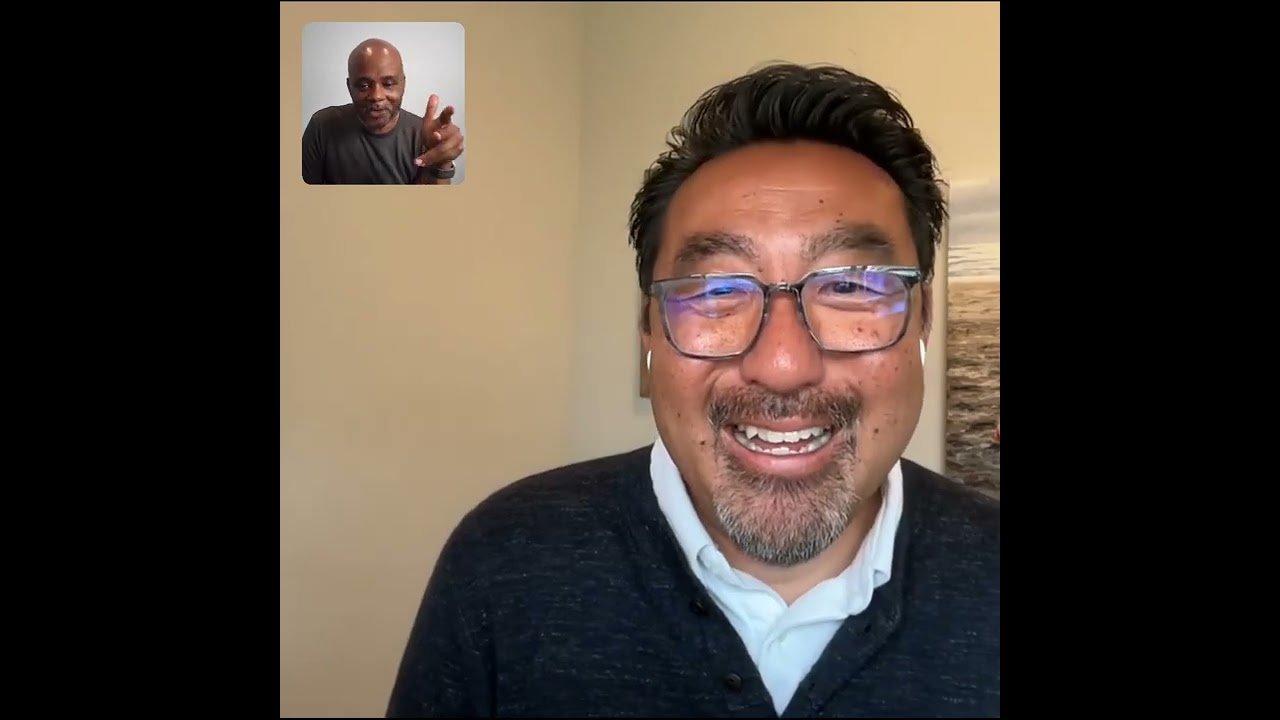
All right, you're listening to and watching for some of you another episode of the CTO Advisor podcast. I have the distinct pleasure of interviewing Gene Kim, author of famously The Phoenix Project, The Unicorn Project. Uh these these seminal pieces of in some cases fictional work. Gene, I got to admit some of these stories they didn't sound fictional to me, but we'll get into that. Uh he has been a huge proponent of DevOps for years. Uh he's been the CTO of Tripwire for 13 years.
His books have sold well over a million copies. He's a Wall Street Journal best-selling author. Jim Gene, welcome to the podcast. Ah, Keith, I'm uh delighted to be here. Thanks for having me on and uh yeah, so many of your guests are are friends of mine and I've just recently heard the interview you did on the Deloitte uh podcast of hearing about like how easy it is to use GPUs some days. So uh great to have me great to be on.
Thank you. Yeah, the uh I've had the pleasure of uh talking to some seminal folks. The Deloitte project was one of my favorite cuz I'm from historically PWC. So I would never thought that I'd be on a podcast with Deloitte, you know, my number one competitor and enemy when I was at PWC, but it was a really really great time. Uh I've been looking forward to this conversation. We've been working for a couple of weeks to get this schedule. We got it scheduled.
No specific topic, but I'm going to start the conversation out with some of the pre-chatter that we had before we hit record. And that is, you know, you have two options. You can put some of your smartest people on the challenge of moving legacy applications out of VMs and putting them into the public cloud. Or you can get them started on Gen AI projects and helping you the organization get started. And I think DevOps from the high-level umbrella, these folks that we give the challenge of implementing platform groups, DevOps programs, they're the same folks.
How do What you're experiencing the conversation around kind of this this precious resource of my smartest people? Oh my goodness, yeah, what a great question. Uh boy, I tend to sort of like mentally rewind my kind of head and to sort of piece together like an answer because I suspect it resonates with your own journey. Uh yeah, so I remember going to my first DevOps event in 2010. I got an email from John Willis and Damon Edwards. So they were running the first DevOps Days in Mountain View, uh California, and that was like right couple months after the first DevOps Days that that was in Ghent that Patrick Debois ran.
And it was just uh it was incredible. I mean, it was just I immediately knew I had found my tribe. I'd always been I've been staying high-performing technology organizations for 25 years and you know, it was typically you know, focused on like the operations and infrastructure folks and information security. And I certainly knew that there was a kind of dev component out there that was like a a big piece of the puzzle, but I I could never find the people who were sort of like-minded, uh you know, kindred spirits.
And then they showed up there. Right, and then you know, I would say probably 50/50 developers, operations, infrastructure. " It was Patrick Debois with the kickoff address and they They the I Love Lucy episode, you know, eating the chocolates off the assembly line, you know, just uh you know, when the assembly line was faster than what uh you know, Lucy could uh handle. Anyways, um it was just so fun chronicling uh and capture you know, just being able to hear all these talks about like these people doing 10 deploys a day, right?
Doing crazy things that were unthinkable, right? Uh you know, uh and so it was my observation that it was really the kind of the best uh technical people, the best leaders who were kind of driving the charge. Uh and that was in the tech giants, you know, Facebook, Amazon, Netflix, Google, uh later Microsoft, uh you know, and there was all the startups, Yelp and uh you know, all all these uh kind of exciting startups that we uh Lyft and Uber at the time.
Uh and and driving these, you know, they were sort of pioneering these patterns. And uh you're right. Um it's also been my observation that, you know, of these people I've studied now for uh you know, 10, 15 years, uh it it was really surprising to me that those people have are still driving large, you know, these transformation large complex organizations, but they're also um a quarter of them are leading uh you know, these GenAI GenAI pilots. Um Friend of mine uh uh Brian Scott, he's a uh principal engineer uh principal architect at Adobe.
He co-leads uh the GenAI rollout and governance programs. And so, you know, imagine there's like 5,000, 10,000 creators at Adobe, right? And uh their job is to sort of maximize liberty, but also maximize responsibility. You know, go as fast as the business needs, but make sure that you know, uh the risks are managed. And so, uh they're working across this vast cross-functional team. Um you know, legal, compliance, information security, dev, ops, infrastructure, platform teams trying to figure out like, all right, how how do we uh um you know, take you know, appropriate risks, you know, uh and let developers and creators do what they want and yet make sure that uh not, you know, injecting existential risk into the organization.
Um, uh, you know, uh, at Vanguard, right? There's a Now, they they have this enterprise-wide Now, we call it distributed experimentation, you know, at scale, right? It's not one person, uh, you know, trying to decide what to do. It's like, you know, hundreds, if not thousands people sort of like trying to figure out like what, you know, given these kind of exotic new technologies, how do we actually make uh, these work for us? Uh, hey, there's I got to share with you one other.
A friend of mine, Dr. Topo Pal, he's at uh, now Fidelity. Um, uh, and he was uh, uh, you know, like many organizations, there there everyone's driving these pilots trying to figure out like what are these good for and what aren't these good for. " So, that's not sustainable. That's not tenable. " It's just uh, a fun time to be in the game. Keith, does this resonate with you? Yeah, it resonates with me and you know, you made the point before we hit the recording, you know, I wish we would have hit record cuz there were some amazing insights in that, you know, five to to seven minute conversation.
But, this this you know, tangent to the topic of our smartest people being put on some of the hardest problems in the enterprise. What we're noticing, I think collectively, is that this isn't this isn't a level one level two problem. You know, whether we're talking about DevOps, GenAI, anything that touches or transforms an organization, these folks need to be skilled in in negotiating, compromising, coercing groups that are outside of their direct sphere of influence. So, you know, we're talking about security, compliance, uh product teams, etc.
And one of the things that interests me about some of your speakers for your upcoming show is that these speakers are not concentrated in the metas, the Googles, the hyperscalers. Talk to me about like the DevOps journey outside of the large hyperscalers. Yeah. I mean, like of like you, I I have nothing but admiration and respect and appreciation for how the hyperscalers, you know, really pioneered these DevOps principles and patterns. I learned so much from them. But for me, my area of passion for the last 10 years is not studying them.
It's really how are these principles and patterns being adopted in large complex organizations that have been around for decades or even centuries. And so, uh I'm going to year 10 of running this conference called the DevOps Enterprise Summit, and we renamed it the Enterprise Technology Leadership Summit. And we originally called it a conference for horses by horses. No unicorns allowed. And so, uh but it's been exciting. It's It's been uh over 1,500 leaders, over 700 enterprises across almost every industry vertical.
And uh you know, I was telling you beforehand, right? These are the most amazing heroic technology journeys uh and transformations I've ever seen. And so, like the oldest organization that presented was Barclays, a bank founded in the year 1695, which actually predates the invention of paper cash in the West. So, and the but the absolute oldest organization was UK HMRC, His Majesty's Revenue and Customs Service. Founded in the year 1200. And it's just, you know, there's no code that goes that far back, but there's certainly traditions and values and probably, you know, certainly processes that go back centuries.
So, you know, it's just been so fun to, you know, chronicle, help chronicle these journeys, you know, technology leaders giving experience reports in a you know, in a very standard form, which I I just love, right? You know, here's our industry, here's how we compete in it, here's the business problem we set out to solve, you know, here's what we did, here's what happened, here's what we learned, here's the problem that still remain. And I just love that because as adult leaders, as adult learners, we don't learn from people people telling us what we think we should do, right?
We learn from like how other people solve problems, right? And then you know, we can um often that's the best way to Oh, and then we make a judgment. Did it work for them? Do I Do I like what happened to them? Did they get fired? Did they get promoted? Did they get more budget, right? And we will, you know, we'll make an informed judgment about how it applies to us. Um and so that's been super fun.
Uh so yeah, we have uh you know, it's always been about experience reports and it's not just Dev and Ops, it's product and technology, it's about, you know, information security, compliance, about boundary spanning. Uh as you say, it's kind of that layer three organizational wiring. Yeah, I think that's what Um you know, when people say DevOps is dead, it's like, what? What? No, DevOps is not dead. Yeah, I don't care about, you know, platform engineering, uh you know, SRE, those are all ways that we can help, you know, organizations wire themselves, you know, to better achieve goals, uh as opposed to like silos that are at adversary, you know, have an adversarial relationship against each other.
And you know, I think the job of the technology leader is uh not getting any easier, right? Do you One of the things I learned working with Dr. Steven Spear, who was famous for his work studying Toyota, he wrote the most widely downloaded and read Harvard Business Review article of all time called uh Decoding the DNA of the Toyota Production System, and that came out in 1999. So, we worked we did a book that we worked on it for 4 years. It came out last year called Wiring the Winning Organization.
But, one of the aha moments that he shared that just blew me away was you know, the more functional specialties you have, you know, dev, ops, security, compliance, legal, like the more sophisticated your organizational wiring has to be. Um and ours just got a little bit more complicated. We now have prompt engineers, ML ops, you know, we have you know, we have now yet two, three more functional specialties that we got to figure out how to wire into our organizations, right? We got to shift these data scientists way right, maybe even put them on PagerDuty, which probably may or may not they may be a big fan of, but you know, what we know what we learned in DevOps is that that's part of the pattern, right?
You you build it, you run it. Anyway, so I'm just excited that in a couple weeks we'll have these kind of great experience reports, but also these, you know, um uh experience reports from these same technology leaders sharing like what works, what doesn't work in gen AI. Just as you said, isn't it isn't it curious how some of the toughest challenges are always being given to the these kind of leaders who proved themselves, you know, solving the last problem that came up, which is like how do we do this DevOps thing or platform engineering?
So, I I like to drill into that a little bit because I I spend a lot of my time talking and advising folks on patterns that I see. And these patterns can be, you know, witnessed and leveraged, whether you're talking about rolling out DevOps, gen AI, or any again technology that impacts the entire organization. I never thought of the idea that data scientists would have to wear pager pagers and be on pager duty, but it makes sense, right? When the when the LLM suggests to put glue on your pizza, that's a Someone's Someone is getting paid.
And the you know, the SRE may not be able to necessarily solve that problem. It's It may need to be a data a deep functional area like a data uh scientist. So, talk to me about some of these patterns that you've witnessed time and time again with in these complex organizations that have to be addressed. Yeah. Yeah, I think there's kind of three. Um you know, so working with Steve Spear on this uh the Wiring the Winning Organization book was such an eye-opener because you know, the question was what's in common between DevOps and Lean and Agile and the Toyota Production System and Lean and you know, I think I could have given you a uh kind of a a pretty good answer um 4 years ago, but I I think now you know, working with Steve, like one of the most prominent Toyota researchers uh there's ever been, you know, we can say concretely, yeah, all those things are incomplete expressions of a far greater but simpler whole.
And you know, whenever you look at these transformations and frameworks, there's really three mechanisms of performance. You know, one is you have to slow down to speed up. We call that slowification. The second is you have to sort of make the partition the problem so they're easier to solve. Uh so that you have, you know, uh the right amounts of coupling and coherence. And then the third is you have to sort of amplify even weak signals of failure so you can, you know, detect and correct faster, but ideally prevent.
Uh you know, and make sure that uh you have a culture that, you know, enables the the uh the accurate and quick transmission of important signals. Um and and so uh I mentioned this just as a way to sort of ground my answer is that, you know, whenever you have these silos, um you know, sometimes silos are perfectly appropriate if uh they don't need to if they don't have a lot to talk about. But in the case of Devon Ops, holy cow, like, you know, if you're doing big deployments that when things go wrong cause chaos and disruption and catastrophe, well then, you know, you do need a lot you need a different orientation for that.
Um, you know, it just can't be just Jira tickets and and handoffs, right? There has to be co-creation, joint problem-solving. Um, but there's other times where you don't want a lot of communication coordination. So you see that in the software architecture, you see that with platform teams, right? It's like I want to get an environment, I don't want to have to, you know, create a ticket, I don't want to have to get it approved. Like I want to do it in one click or in the command line.
And I think we're still going to we're we're we're learning is that, you know, um, we don't know where these new gen AI pieces fit in, right? Some part what parts can be put into a platform where, you know, I don't want to talk to a data scientists and um, uh, or which parts do you actually need them in the team? So like when you said uh, like when someone starts recommending glue on your pizza, it's like, okay, is that a Like uh, you know, what what do we do?
In fact, I saw a talk by the engineering lead for the person who uh, owned the chat GPT team at Open AI. And he just gave this amazing talk. And you know, he was talking about like having to go deep into not just a Kubernetes cluster, but understand what was happening in GPUs and how do you ramp capacity, you know, as they're on this rocket ship to 100 million users. I mean, you talk about you know, the domain of full stack just getting even a bit bigger.
Like I don't know like who signed up for you know, having to go down and then actually see look at, you know, GPU memory utilization, right? But you know, I don't think most people would say that's a reasonable place for most developers to spend time in. So how how do we sort of configure our organization so that, you know, um, uh, we're focusing on the business problem. But I was I was sharing with you the story that uh I tried to get a GPU um instance on a in the cloud and it took me 2 hours and I couldn't even get H top to run.
Screwed up the driver installation. Like that is not the way I want to spend my time. So I it's exciting exciting place to be in the game. It is an exciting place to be in the game. So last question, let's you know, kind of get a plug in and and for your show happening in in actually just a couple of weeks. Who is this for? Like we we've talked a lot about, you know, we've talked all the way from GPU installation and driver installation all the way up to big moving organization leadership.
Where is the sweet spot? Where is these Who will be there and what conversations are going to be had? Yeah, that was that's a great question. Uh yeah, so I would say the sweet spot for the Enterprise Technology Leadership Summit are technology leaders. So you know, they typically are you know, third-line leaders or more as that's like the the directors. Uh you know, dev, infrastructure and ops, information security. Um and it's for anyone trying to figure out how to get better outcomes, right?
That feel like devops-y like problems or platform engineering or SRE. And one of the things I'm just super excited about is that the date is a three-day conference, August 20th to August 22nd. But day two is almost like a single-track one-day ultimate learning day for GenAI. And so we're going to have experience reports, half the talks are from um uh technology leaders from you know, large complex enterprises and half are from uh so like for example uh you know, Vanguard and Adobe and Cisco and Adidas.
They'll all be sharing kind of like what have we been doing and what have we learned? What worked? What didn't work? And then uh the other half are uh you know, subject matter experts from uh GenAI companies. So we have a uh Adam Seligman, he's VP of developer experience at AWS who owns the GenAI GenAI uh tooling. Uh Paige Bailey, she's uh she was a one of the senior product leads for Google Gemini and before that Palm 2 and so that's super cool.
Uh, Joe Butler is from Open AI and they'll be talking about like what do technology leaders need to know, right? How do they make informed decisions on, you know, you know, Gen AI is exciting but, you know, uh, what can they share in terms of field experiences about, you know, what's working, what's not working with the clients. So, I think it's just I am super super excited for this. And website, where where can folks go register for the conference? Oh, yeah.
com and just go to events. com/events and, uh, I'll give you a link of like, uh, the what to expect and, uh, it's a big blog post I wrote that shared what I'm most excited about for the conference. And I'll make sure that's in the show notes. com for the mothership, but, you know, CTO Advisor is where you go get this deep technical content. I I still love the platform and I love the audience. You can find me and engage with me on the Twitters.
com these days at ctoadvisor. com? Yeah, absolutely. I'm on, uh, I still call Twitter, uh, at real Gene Kim and, uh, yeah, I I still, um, man, talk about Gen AI, it's probably one of the best places to learn about that. I mean, it's, uh, ridiculous just how much you can learn just by, uh, just through it. Absolutely. All right. Talk to you next CTO Advisor podcast. James, thanks for joining us. Keith, thank you for having me on and keep up all the great work.


