Expanding your skill beyond technology - Cincinnati VMUG
Transcript
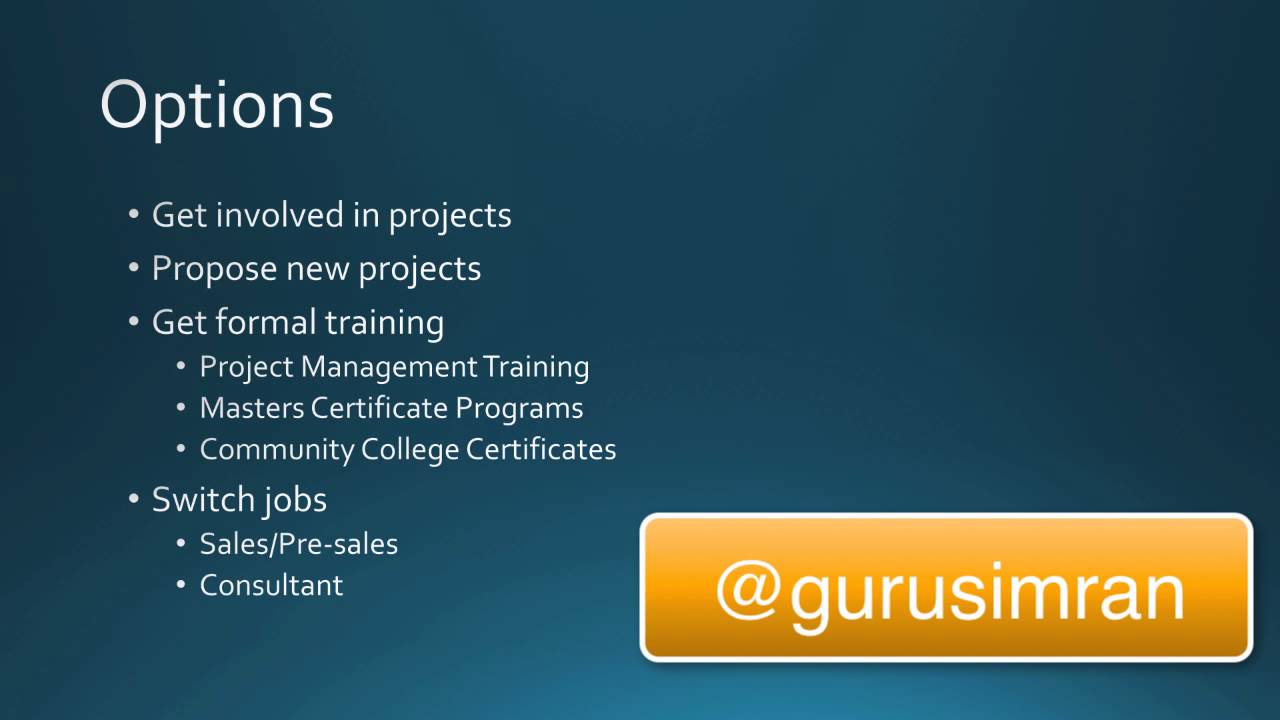
hi this is Q thousand from the CTO visor calm you're watching expanding your skill beyond technology this is a replay from the Cincinnati V mug that was held on November 12 I did this presentation at the request of that local V mug and I thought it'd be a great idea to share that with the folks who aren't able to attend directly just to give a recap of who I am if you haven't met me before I'm the CTO advisor on the twitters i'm the founder of the CTO advisor which is something I do on the side every now and again let's start this off by an introduction from my career I've been in IT since the mid-90s so that means that one of my very first certifications was netware for that one most recently I've spent the past few years in a more of an architect type of role beginning two years as an architect for a parameter Martin where I learned how to properly use system engineering methodologies to managed IT infrastructures I moved over to PwC as a consultant where I picked up a good bulk of my business skill between Lockheed Martin and PwC I got a chance to do some incredibly interesting projects ranging from helping customers with their PCI compliance to helping fortune 50 software company defying their data center strategy globally I most recently helped Abbott and @v split into two fortune 200 companies so if you're thinking of kind of what needs to happen with an IT data center when you break off from a huge company it's a two smaller but still huge companies the standing up of a new IT staff the moving of a really large SI p infrastructure that's what I helped those guys with that's what I kind of the skill I picked up pwc currently I am the senior essay p architect at V I've moved on from pwc I got a little burnt out from management consulting full time it was a great opportunity picked up a lot of technical and plus business skilled and I'm now leveraging those skill at V full time so let's talk about the challenge the consolidation of silos brought by convergence I think it's evident Brian grace Leah Wikibon wrote a post I think it's going to a little bit over a year now over on techtarget talking about the impact of the convergence of silos on the data center engineer and what skills that data center engineer has to pick up so from a practical perspective data center engineers have been accustomed to collapsing silos and this whole software eating the world and becoming more exposed to technologies outside of their similar domain network administrators are coming more familiar with virtualization server administrators administrators are becoming more familiar with storage that consolidation continues to happen and because of that end user organizations are starting to scale back on the size of their IT work floors that has a direct impact on most of us watching this video outsourcing is still very much a big thing companies are starting implementations of where they're outsourcing non critical function functions this can include anywhere from IT two HR etc etc the data center is no exception and I think we're seeing this in the larger industry with the dell and emc merger I think before we could say you know what the data centers collapsing cloud is starting to become a much more prevalent solution in a data center but we can still go and you know find jobs at those cloud providers and now we're starting to see even those cloud fighters are starting to collapse and that market is starting to merge look no further than HP exiting the public cloud space so that's the challenge how do we continue to offer value in an industry that seems to be collapsing upon itself I don't think this is much different than what we faced in the server virtualization move when we started to do much more with less now we can manage a couple of hundred more than a couple of hundred we can manage a 1500 to 2000 servers / administrator based on the automation tools that we have we had to move higher up the stack before and this is no different we have to move higher up to stack the stack just becomes the business tag versus the technology stack most of you guys who follow me on the twitters are aware that a year ago I undertook a very public job search one of the things that learnt from my job search is that business is really like the combination of my business skill and my technical background they deeply desired that skill VARs big-name IT vendors are starting to get into consulting consulting is kind of the Savior for some of these industries and because i had a management consulting background the skill set was highly highly desirable by a lot of the vendors however what I learned was that I doubt the knob a little bit too far to the right or too deep into the business skill arena and my technical skills weren't sharp enough for these large IT vendors so what that taught me or the hard lesson that I learned from that was that if you want to continue down a technical route you need to make sure that you keep your technical skills up you can't dial it too far into the business side unless you want to completely make a career change and leave that cortex kill behind so let's talk about options what does this practically look like to change or to adapt to the changing landscape within the data center my first recommendation is get involved locally GS did the keynote in the morning session and one of the great great examples he used was talking about RTO to the business recovery time objective for disaster recovery if you are aware that your disaster recovery project or your disaster recovery plan is pretty weak and the realistic RTO is like two weeks three weeks to recover the systems and addie in the in case of a dr that's a powerful tool to promote a new project for solving a really critical business problem take that to your manager take it to your finance group and say hey look we have this serious problem that we need to solve get involved in that project that's kind of the second bullet propose this new project and get involved with it see that project from start to finish if you brought up the issue bring about the solution understand what it takes within your organization to get projects approved another option is to get formal training if you're used to kind of the rigor of certifications there's options on the business side I like to pick on project management because i have an advanced degree in project management and in the example of project management p.m.
i has a PMP project management professional certification that you can achieve similar to kind of if you're getting the you'r vcp and going for your vcp all the way up to your VC DX there's stepping stones in that process so the PMP is the highest level certification and you can start with lower level certifications another option go to your local university and then roll in the master certificate program this isn't a full master's program that take two years this is usually a program that takes a few months works really well with working professionals you meet on the weekends and it's usually a combination of two or three classes so let's say you want to get into contract management or negotiations they have tracks specifically geared towards those career goals another option that we shouldn't dismiss is community college certificates or community college courses just like if you need to get an introductory to a technology or programming language that you're not familiar with junior colleges offer a really great path to that 100 200 level course that will get you East into that new business role that you're looking to do another option plain and simple you can just switch your jobs become a sales or pre sales engineer with a vendor or VAR that will get you an awful lot of exposure to business problems that you might not experience with your current role really you know what it's it's that's what I have to warn you this is a tough role if you've never done pre-sales ourselves before and you have you carry a quota is a much different stretch stress than what you would have if you are in operations so tread lightly on that career path and then lastly you can take the routes that I took I had a combination of formal training and then I moved over into management consulting you don't have to necessarily move all the way into management consulting I think that is a bit of a drastic career change for most of us IT professionals but you can most definitely work with technology consultant there's plenty of boutique organizations or consulting practices that don't require the heavy travel that management consulting roles require so let's recap things are changing the industry is changing we're having huge shifts but we shouldn't be scared of these ships ships we have a path obtaining business skill will make you highly desirable to your current employer and also to future employers most importantly you need to go out and do something whether it's switching jobs getting formal training proposing new projects at work something that's a little bit different than your day-to-day job whether it's just spending the day every month for every two weeks shouting someone in another department understanding the business and what it does and how you can use IT to improve your organization well that's it for this video it was much shorten I really appreciated the guys at the Cincinnati V mug I had a great time special shout-out to mark may who reached out to contact me I really would not have had this content put together if it wasn't for his invite if you haven't been to a V mug or you're not part of your local V mug I highly suggest that you get involved join me look look into V mug advantage those guys do a really really great job of putting together these conferences and really helping you to develop your technical and non-technical skills thanks a lot talk to you guys next time


