
Dell EMC Cloud Storage - VMworld 2019
Transcript
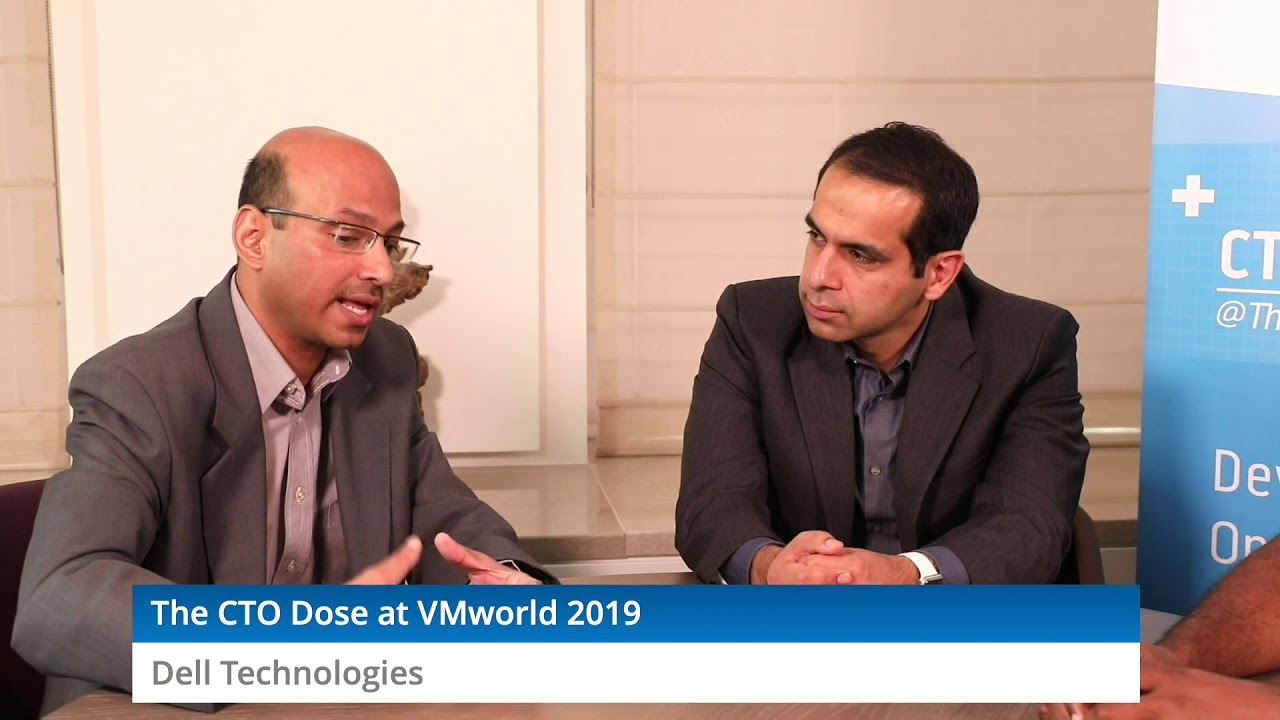
hey how about a few thousand from the CTO advisor calm and you're watching continuing coverage of VMworld 2019 in San Francisco California and I'm joined in this sponsored video by Dale technologies what we're going to continue the conversation around data specifically we're joined by Varun chopper yes VP of Marketing and southern Santa made mana director of solutions we're sorry what's your title specifically get till I have enough solutions marketing for DMZ stories with you all right so we had titles one couple months ago at Dell
technologies world great announcement around cloud services the ability to store zeros and ones in the cloud however it's not just about that what has been the conversation at this VM world since around data you know there's so many as you said there's so many strands to think about when customers are evaluating you know what they want to do in the club with their cloud strategies but data is a very very critical part of this what we hear from customers is okay great I can mind with
my workloads I can spin up workloads now in different clouds there's more choice than ever but the data gravity factors like data sovereignty you know where your data sets where regulations say or day I should set how quickly you can have data be accessible in different geographic locations as you expand your services you open up new markets these are non trivial issues that a lot of our customers are struggling director they're looking to us to really help them solve these challenges around data the Monday Club
one of the realities multi-cloud isn't going away anytime soon right right it is that it's so easy there doc different Club solutions it's not just the hyper scanners it's cloud service providers it's your own data centers but with that choice comes that complexity of having to figure out how to have all these piece parts move around and moving data over the LAN you know as challenging as everything we haven't figured out a way to get that across haven't figured out how to beat the speed of
light so trying to be talk to me about that talk to me about this speed a light challenge that customers have if I if I love the compute in GCP and I want the services of the event-driven computer lambda in AWS but my data is needed in both platforms I don't want to make that where I mean that's a practical problem I need the data in both locations but I can't have to be manage my data in both locations absolutely in fact not only like you
need data in both locations it also brings out how do I move my data from one to twelve to two cloud three and each time a time to do that you have to pay the increase fees of getting out getting in all of all of those things now customers as you say are trying to access data from multiple clouds because of different use cases ranging from test a workload migration disaster recovery to the flower now we tell technologies have come up with different cloud storage services
I will give you one specific example that helps customer with exactly the same problem you are talking so we know here at VMworld VMR cloud on AWS that's a great solution where you can move your on-premises SDC to the cloud with consistent operations with all their workloads right but if you take a look at it storage is associated with computing nodes so as you need to grow your storage it becomes costly but not only that that student is not persistent right so once you delete a
no storage goes up in order to solve that problem ok vmware offers something called external storage to manage services and we technologies offer cloud storage services where the external storage can live in our other cloud so let's pause there process make sure I captured this thought and BMC be more commonly the EWS is built on VC each individual node has a certain amount of data I think they see the five to ten terabytes of data we had game being lean on lean on last year who
used to work for being where she lived the SP she was SVP of storage available in VMware and she talked about how for some customers that 10 terabyte limit one is simply not enough data and then you're saying and you're adding upon that is that that data is ephemeral in the sense that it's not what I'm up I don't want to say it's not what I'm accustomed to you have a limitation of that data attached to that note yes and when you are growing from endeavor
to 20 terabyte guess what you are not going to be just for storage but the compute that that needs to be associated that's a classic HCI problem yes block is both compute in storage if I want either work on one more CPU about warm memory wherever I want or stores I have to add another block yes now think about this alternative solution so suppose you have Danny MC stole it whether it's Power Max or unity or ISIL on the enterprise great high performance resiliency and ability
it's sitting somewhere in a managed services cloud and then we give you managed direct connect to like AWS GCE a sure now what you are eating is you can actually get persistent durable storage where you can directly connect from multiple different clouds and you don't have to move the data around and you don't you can scare and get all this enterprise spread of features independent off that your compute so let's take the example of you want to do disaster you go for it to the cloud
how can we achieve in this model so suppose you have your primary data center and you are replicating to the managed services cloud on sale a that you have C unity here and that MC unity over there now in the case like when our disaster happens you want to fail over your internet we have our environment to the cloud right so what you do you take that replicated data make it a cloud volume which essentially means it can be attached directly to be my cloud on
AWS you move the VMS over and let you have your data center up and running just as you know the same is enough same type of performance in this environment so against one things I'm having a hard time wrapping my head around is there you know the back a couple years ago we would call this ball computing the fog layer where you know you kind of have assets in the cloud on Prem in between later one of the challenges with this model has been leasing in
and out of the different locations when you say I have a high-performing store derated solution what type of workloads can I run in that scenario like what are some of those typical applications everyone sure you can actually run see I gave you the fellowman exam right so there are a couple of use cases that you can do say for example our analytics work looks like you have a large pool of data I move it to the cloud and you run analytics on top of it so
let's go let's go deeper a little bit deeper down there in that scenario I have the analytics piece you know one of the problems that people are having which is real time is that they have something like ASAP Hana and they want to analyze data sets from different sources what would be really great is if I could take in unity snapshot of the data put it into the cloud service hydrate that snapshot attached vm's or cloud native services to that run analytics against that is that
what you're saying that means basically - yes and in fact like another extension would be with the iserlohn example right you can actually have data they built into the cloud and then you can access data using many different protocols from many different clouds running the analytics on that data they built on Isilon I think this area but what good this enables essentially Heath is that we what we hear from customers is they want to take advantage of these services that they're providing services that the cloud
providers are providing high diversity you know some cloud providers have a better yeah I know some have really good analytics engines but the limitation has always been how do we get our data there and now you're basically saying you have you know very low latency connections do those compute services they're accessing your data but at the same time it's you're near it's your problem to override right so you have the durability the SLO all of the things that you take advantage of and depend on on
premises do not take advantage of that in the cloud environment as well so the CTO visor has this framework that we call the data infrastructure in which we you're saying you know what no matter where your workload we work will be to compute the application etc or whatever that lives is irrelevant to your data infrastructure data infrastructure should be consistent across I asked on-prem and SAS hopefully in the future so what you got what you gather laying out is basically a vision for that back-end for
that data infrastructure framework the ability to kind of move compute wherever you need it to be of course you will sacrifice and latency in some cases but that's okay for most use cases because you control the data set which is the bigger problem one thing customers have been talking about and as far as the latency point you are making so these manage clouds are actually co-located with hyper scattered cloud environments so that we have direct connect from Amazon Cloud to this managed services cloud so yes
you cannot get say 300 less than 300 micro second second lap dances that we offer in formats but we need three milliseconds of latency and with like less than we are staying let's say it's less than 70% less cost can actually like achieve this so yeah when I thought when I hear directing it I think of direct connected from the customer perspective and which I have a direct connect from my data center to AWS which goes over a LAN connection but this isn't the case this
is Direct Connect co-located next to a hyper scalar business etc so we're getting LAN speeds from my floor area yeah to do via a BMC a VMI upon an obvious cloud to the store to external storage so that you are getting that speed boat so I really appreciate you guys taking the time out of your busy being warm schedule to go deeper in science the data solutions within del EMC in del technologies if people want to engage they all solutions team hope they do it they
should go to Delhi mc.com slash cloud and we have information there as well as how to reach our different teams there Shannon I really appreciate you guys stopping by the experiment for more coverage from real-world 2019 visit the website the CTO visor calm more importantly subscribe to the YouTube channel so you can keep getting these alerts about the content that we create we are having more conversations at least three more conversations with Dell technologies throughout the week as well as being where stay tuned follow the
hashtag hashtag CTO tools talk to you next CTO dose


