Datrium Data Protection
Transcript
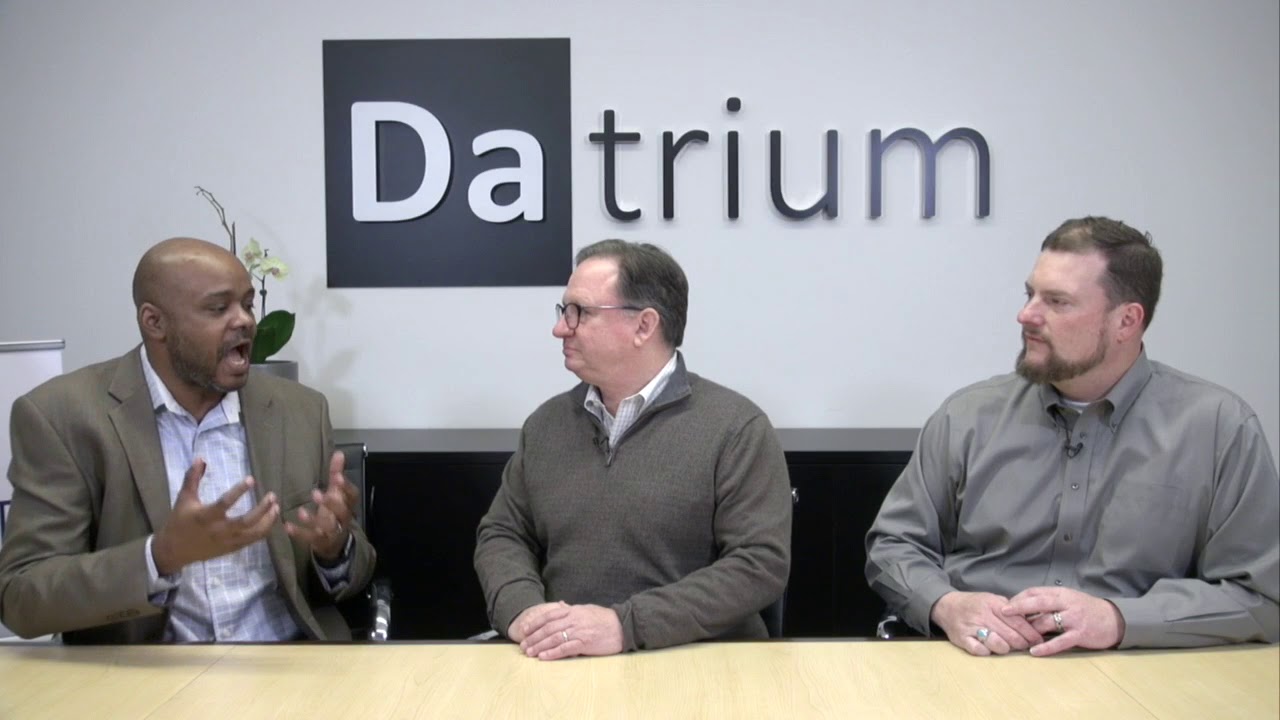
I welcome back to the CTO advisor daily doles at date room for the V Brown Bag build a want to learn more about buildings and gentlemen go to the Brown Bag dot-com and there's alley to the V Brown big buildings so again I'm joined with you go Patterson CTO founder of patron and Deb Hamilton director of systems engineering for day trip and we're gonna talk data management now you guys are normally known as a primary storage company and data management their primary storage to this point
has been to different conversations however customers want the ability to seamlessly go from their primary data to secondary data in one tier and why should it be two separate systems why do I need a separate backup copy data system in order to manage copy data when it's all perfectly variator one story should be to do this tell me about what is the date reom story around copy data indeed imagine so historically serving both data protection or snapshot retention and super high performance have been at odds
you can either optimize for performance and primary storage workloads or you could maybe optimized for data protection and cost because the size of retained snapshots can be huge if I if I figure that have everything your primary memory you know a whole have to warn you cause they be at all but there's a cost effect right so but atrium and and has is really a combination of people from VMware and data domain so data domain was really the first system that optimized disk-based storage for retention
of backup data in a because the effect ll secondary Stewart nice easy target for a lot of our traditional backup solutions Romans managed to market that's right but david domain you know i when i was there we were really focused on that streaming backup data right and we didn't really crack the nut on how to come get primary storage performance out of that date reom really pushes that technology further to combine through server power the leveraging the servers and local flash in the servers to get
you primary storage performance it runs as if it's just local flash inside of the server but tie that with a scale out data pool for retaining snapshots of the data running in the hose in a cost optimized way that is deduplicated locally compressed erasure coded all of that good stuff that makes it a cost-effective to retain snapshots on disk and the de trium dbx really combines those two pieces primary storage running at the speed of local flesh with a scale out cost optimized data pool for
retention of snapshots so devin help me break this out practically from a customer perspective sure when hyper converts providers come to me and say hey here's a bunch of low low cost storage that low cost storage is usually optimized to run workloads and VMS etc and then there is a market for secondary storage storage like data domain and a bunch of other vendors that have come about two separate systems how customers in the field the point is what does this look like do i have a
bunch of super micro servers as jbods or what does this look like yeah you know I really appreciate you you're representing and advocating the questions that we get from the customer on a daily basis and what I tend to tell them is that you know we've watched an evolution of x86 compute which is really the Enabling character in what it is that we're doing today and has provided the limitation or enhancement of these technologies over time so if you look at how x86 compute has scaled
we are now living in a world where within one framework we can use a customer server even a two three-year-old server to do IO compute to do pre calculation for deduplication to do encryption of that data to encryption or basically compression of that data and have all those be on-the-fly processes versus any kind of a post process function so and when you look at how this is deployed our customers really go kind of one of two ways or they'll blend they'll either use servers that they
already have and they're pushing our software out to there and that's basically much more like the software-defined approach but the primary storage pool is this data node so they have a resilient capacity that handles all of the writes and in fact provides you a single namespace for global deduplication regardless of what servers they bring to the table and those servers can be dissimilar and we talked about that before at the same time if a customer says hey my servers are really old and and or I
don't want to take them offline and put flash in them because there's no flash in them right now talk to me about date tree and compute nodes and so we bring our own compute nodes in and now they have a turnkey solution they trim compute nodes daydream data nodes and those work cohesively together courses are top-of-the-line brand-new servers they can build them as big and as gnarly as they want there's one license for all the features and everything so it's very simple as far as deploying
it consuming it pain for it but at the end of the day a lot of our customers that bring in de trim compute nodes will also say well can I also have some licenses for some of the storage computers that I have laying around things that I used for various applications before that are that are legacy that they're going to move into this cluster and use for additional utility so we're driving better efficiency better amortization better utilization of existing infrastructure in addition to providing them a
turnkey solution so let's talk around around this story though the primary use case for data protection which is backup one of the terms I hear a lot is snapshots snapshots aren't backups so talk to me practically about okay I want to use the traditional backup feature maybe data protection solution how do you guys handle the simple concept of that yeah so in the tradition kind of array you're managing storage centric artifacts like London's and snapshotting a lung that calls many birch bm's many running many applications
that's not really snap that's not really backing up that application right so but in the day tree of dbx we do have replication but it looks a lot more like a backup application than it looks like a traditional array replication on a traditional ray I have I can do snapshots multiple value multiple versions of the same set of data but that's in the same physical array I want to back it up whether it's to add a to go me to tape or some other medium since
you guys have a distributed model I can back it up to what what's the concept that I'm backing it moving it off to a different you know off of that what we would have considered primary storage yeah so so it starts by being very VM centric and app centric right you know so by having BSS providers and so forth so you can define protection group sets of VMs to be snapped in a consistent way and then as a group those snapshots can be retained locally within
the system without having to do a full lift of that data out but it absolutely needs to be on another system and in another geography to really count as a protected copy right and so we also leverage the servers to drive replication to other DB X's but that replication is of these protection group snapshots it's very application focused we have a catalog that can list the snapshots of VMs and applications that are local that are remote you can see that all in the one in the
one console and any of those snapshots whether local or remote you can clone from them to make a new VM from that old from that's that shot or you can just restore you can roll back the VM to its previous point in time so and all of that fine grained data management one of the I think one of the best use cases for this type of Technology replication technology in general it is for disaster recovery davon hire people in the field using this for dr tech
yeah it's it's an important question so the customer feedback really drives best practices for us and so we we take a lot of input from the customer we're very open and transparent and what we have developed is basically a methodology that says hey look snapshots are very familiar to everybody and replication is very familiar to everybody the granularity that we bring to the table isn't necessarily as familiar so we do a little bit of Education to the customer to say hey look you can develop protection
groups and build snapshot policies around individual VMs groups of VMs the entire cluster or even files underneath those VMs and that you have two constructs that are at your disposal the first of courses there's the data store and everybody understands the data store in VMware that's where all the VMS are living the V disks and so on underneath that is an independent snap store and that snap store gives you the agility to come in there and manipulate either snapshots at the primary site or replicas of
a secondary site and do things with them and that could be any of the copy data management functions that could be you know cloning stuff out replicating it manually to different location doing actual restores or even going also live into you know declaring a disaster and doing the failover to a secondary site so really the the characters that enable this are to say our snapshot granularity time-based allows you to develop groups of snapshots and and have that application synchronization we wrote our own VSS provider so
we can integrate there on the Microsoft side and when you replicate you're replicating on a person app shop basis we are deduplication aware over the wire the data that sent over the wire of course is encrypted so you have a great facility for not only security of that data but efficiency on the wire for bandwidth that you're utilizing and what you end up with the secondary side is even having a dissimilar architecture a different number of servers down there as long as you've got enough capacity
to fit the retention depth that you want you can build that secondary site to be whatever you want it to look like and certainly reduce cost of that secondary side so DRS simply becomes whatever you want to categorize as stuff that needs to come when you declare a disaster have enough facility down there to handle that so simple question how much does this cost is this part of the license an additional license beam by the amount of backup what's the catch snapshot creation and replication is
part of the base package so if you have a dbx it can snapshot and if you get another one it can replicate or you can replicate into Amazon into the public cloud so that brings up an interesting point obviously you got that's a feature of the product product but it's not your primary use case so obviously you guys don't do everything in data protection space trick what about the partner ecosystem yeah so it's really important that that we leverage the partner ecosystem because there are things
that we don't do and you're absolutely right we wanted to get to the point where we had complete disaster recovery capability at a snapshot granularity and even files underneath and containers underneath the VM itself but we're not going to do things like single mailbox recovery that's not the business that we're in we leverage a very rich partner ecosystem with other solutions that the customer often already has license and what we find is that because of the acceleration at the application layer that dvx provides we can
help them get back up jobs done quicker with those tools that provide granularity so everybody understands tools like Kroll Ontrack or or VM or zurdo and things like that we have best practices and we've vetted out how we integrate with them to where if those are on-premise resources the customer already has we can just make them better so Devon you go I really appreciate you guys joining the CTO of Izar daily dulls again at date rooms sponsored by daegeum check out the V brown-bag material if
you guys want to see this stuff actually working visit V brown-bag love they're building it and give it a new engineer and customers view