Build vs. SaaS with Calvin Hendryx Parker
Transcript
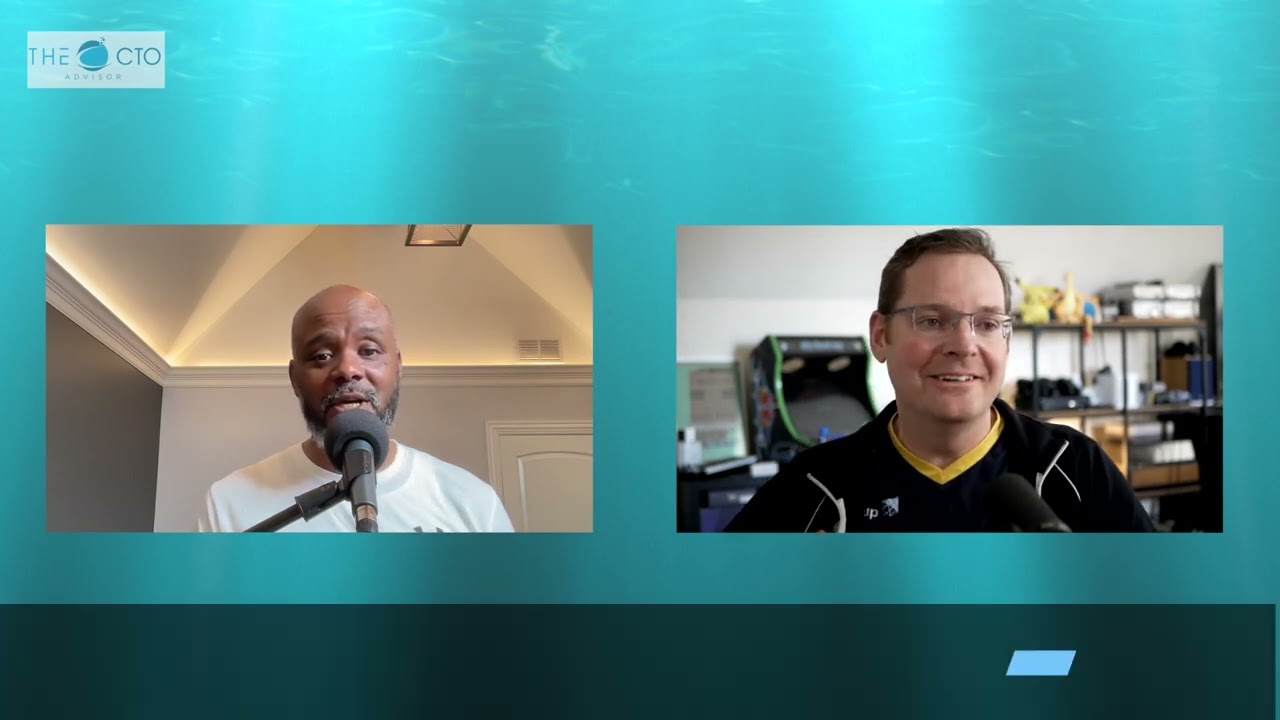
all right you're watching another episode of the CTO advisor podcast I guess that's my official intro another episode of the CTO advisor podcast I'm joined with a good friend from the tech Field Day community and fellow CTO Calvin Hendricks Parker CTO of six feet up Calvin before we get started with the topic which is build versus buy give us a quick intro of six feet up what do you what do you folks do there sure uh then Keith it's been awesome and getting to know you and finally now being on the podcast I I love this excited to be here so six feet up is a software a cloud python consulting company where we help impactful leaders and accelerate their digital Transformations we have got very senior development resources who love working on app Dev AI Big Data Cloud orchestration you know projects and our customers are in interesting Fields I'm really working on a lot of things that are kind of climate Tech good for humankind type impactful projects is actually our most recent initiatives so in the background if people are watching this on YouTube or in video you have a a a game oh yeah back we'll we'll get to that at the end so tease people that if they stay at the end we get to talk about the game uh cabinet that you have in the background definitely so the reason why we're having a podcast together is because both of us have similar interests around events you put on an annual show uh python uh what is this pyconf no it's the python Web Conference yeah and so you you have this business challenge that you want to bring together your community virtually actually even before the the now times tell us about kind of the origin of the conference in in the goal yeah so the python Web Conference came about because the larger python Community um has kind of moved in different directions so python has become a very popular language like number one programming language in the world and a lot of folks have picked it up and use it for you know data orchestration and it's just not kind of a one-trick pony and I felt like the the current conference situation like the in-person conferences for python around like pycon or Regional python conferences weren't catering really well to some of the topics I loved um which is like maybe more advanced you know web-based topics and that was actually the original impetus for python Web Conference the secondary reason we started doing this was for folks who couldn't travel or it was in plausible or financially impractical for them to make it to a conference maybe you were in Central Asia or in Africa or some some place where maybe you can get a visa to come to one of these Regional conferences or there's not a Regional Conference near you we still wanted to bring that python Community to those folks and this was pre-pandemic 2019 was our first one yeah yeah we started off with uh three tracks over two days or and did a a basically the python conference I thought was missing from the community so I've been supporting virtual conferences actually even before the pandemic the VMware user group I consulted for the VMware user group for a number of years actually they were one of my first customers as the CTO advisor one of the things that I did with them was content uh curation and picking out uh topics and call for papers and helping them kind of curate and put on their virtual event conference which they've been doing I think since 2017 2018.
so I have I had some good familiarity with virtual conferences and virtual conference platforms even before the pandemic so you're going into this in 2019 there's platforms around you folks decided to build your own platform versus using one of the existing platforms let's get into the why of that first yeah yeah you know kind of why I mean no one builds things anymore Calvin it's all about SAS and I wish I could have found the platform I think they would have fit for this the very first year we did the conference we basically kind of you know bailing wire and bubble gum and duct taped it together with a couple Zoom channels and some in slack so basically the slack channels will be there there was a conference schedule posted online and if you had you know purchased a ticket you could come in and basically you would have to switch your Zoom client from like one Zoom channel to the next Zoom channel to the next Zoom channel to actually watch any of the the three tracks and that we realized that obviously the sub-optimal experience for the attendees we really want the attendees to be engaged we wanted to have integrated experience and I wanted to do it in a way that really focused on their experience like I think a lot of the virtual event platforms are focused on maybe the sponsor experience or the legion experience or this kind of virtual expo hall experience and I didn't think they in it especially in 2019 and 2020 I don't believe any of them did a really good you know super job of that this in 2020 obviously things changed the world kind of flipped around and a lot of people went into this virtual event software space and I still don't think they're doing a good job otherwise I think we would have switched but in the original emphasis to behind the build was none of the platforms that were available really fit or suited that integrated experience where I was trying to really cater to our attendees as much as possible I really wanted them to connect with one another connect with the speakers and a lot of the platforms just don't facilitate that in a really fluid form so you have a very developer focused organization yeah you folks literally the value of engaging with you is to create code not necessarily operations I don't think so why take on the burden of operations because you've since kind of created offered this as a product in addition to an in-house offering yeah and so two questions one yeah let's talk about let's talk about the journey to offering this as an offering and then to kind of this what happens when you now have customers on on the platform yeah so year one 2020 with the pro the platform uh after we did python Web Conference I had 10 leads that next week from people who had been at the conference and said we want to use your platform for our conferences this year we had at six feet up we've had a couple false starts on maybe some building product and we really kind of settled on the fact that we are a service company we do Consulting we are like very senior folks who enjoy solving tricky problems for other people not necessarily always solving our own problems for our own platforms but this time we had real customers online like there were people who were very interested very eager to to participate and use the platform so we had to rearrange some of our internal human resources to support operating a new product which is very different because now we're basically becoming event producers having support staff to support the the you know help desk and the back-end operations of a virtual event you know platform which was challenging um I think we've we've kind of changed our minds about how we feel about that a little bit and kind of backed away from selling the platform as much as we had in that first year but we've not backed away from building the platform we actually really still believe in this platform for ourselves because it provides the exact experience we wanted to convey for our attendees to our our events another upside I'll kind of talk a little bit of kind of expanding in a second area here is another upside we found with the building our own platform in-house being that we are a consulting company who does consult to other other organizations and we do deliver code that is our true value is having this platform enabled our developers to do some green field work and work on some Leading Edge Technologies in the cloud that we had not had a chance to really touch with some of the customers we were working with who may have been maybe a little further behind that adoption scale so being able to actually onboard new developers into our team giving them a product that we own and is only ours that they can cut their teeth on we can basically teach them the six feet up way of developing and delivering you know on our value in-house without having to kind of risk them going out into a maybe a customer's site and not really portraying like what the true value of 6PM might be yeah I've heard this theme repeatedly over the past couple of weeks I don't know if you noticed in the tech Field Day channel for the edge field day which is just ending the week that we're recording this that Brian Chambers who's the director of Enterprise architecture for Chick-fil-A and the person responsible for the kubernetes at the edge on Intel Nooks uh we discovered this in the past couple of weeks that his team the Enterprise architecture team was responsible for that platform which is crazy if you think about it Enterprise architecture uh group within a large Enterprise delivering a platform and he talked a lot about many of the same lessons that you learned and that the team was able to learn that running a product inside of a organization and being responsible for customer and delivery and Etc has its advantages oh yeah it also has its pitfalls I mean there's a lot of work let's talk about some of the pitfalls yeah don't get me wrong it's it's a lot of work once you get on the software development product like once you're building a product and maintaining a product you're on that treadmill and you can't get off because you've got to support it now like this but I think my CEO asked me how much we're going to spend next year on loud swarm development loud swarms anymore the virtual event platform and I I kind of threw out a big number and they were a little shocked I said well you understand there's there's continual continual movement on all the libraries so the the under the coverage Lots worm is actually based on the Django python application framework well there's multiple releases per year security and major releases uh we've got a react front end those have multiple security and major releases each year as well we're also dealing with databases and redis and all the other things that kind of go all the things that are around this whole ecosystem have to be maintained or else they bit rot I mean there's just no there's no case anymore where you can launch a piece of software and have it just continually run without needing any maintenance you could do it it's risky because obviously security vulnerabilities and attack service vectors and all those kinds of things that happen uh performance issues as you scale there's going to be new features that always need to be added uh I mean how many times have you gotten frustrated going to some governmental site you tell has not been updated since 1998 and the usability of those systems are just terrible and I don't want to frustrate our users so we have committed to maintaining this product which means it's hours that we spend internally on the product but we have to get our return out of that value and our part of our return has been that training of our developers giving them those those experiences those experiences with um you know specific Cloud technologies that maybe they've not touched before and the great experience during our virtual events and we still do sell the loudsporn platform to various communities that have a good fit with the type of a virtual event platform we built so let's talk a little bit about that operating model you know you have basically this natural Journey that AWS likes to talk about that uh the it vendors that like to talk about kind of this devops movement where you have developers that had an idea specifically you you had an idea you built the idea and now you have to do steady state operations yeah you're not going to spin up an entire infrastructure team because it's not that type of product and that Revenue structure so talk to me a little bit about this natural devops movement where have you found you know kind of this story to be when I say devops Story I mean developers doing their own operations where have you found it to be kind of real and advantageous advantageous and where do you kind of wish you know I wish I had an infrastructure team to kind of throw these things over to so over the course of developing the product we needed to be able to do releases or have preview environments or QA environments or Dev environments so we could test and we don't have a big operations team anymore uh we really have honed in on being a senior team of Developers but the the whole movement around CI CD and devops and the whole movement around serverless in the cloud has reduced our our need to worry about patching servers or things failing you know the whole aspect of like Auto you know self-healing and auto scaling uh whether it's in kubernetes the loudspar platform itself currently runs on fargate using Amazon's ECS which has been nice because we can define those tasks as terraform code or some kind of infrastructure as code which is a lot more comfortable for those developers to kind of wrap their heads around again another set of new technologies that they got to understand you know try out on their own without having to have the big worry of like maybe having a customer site customer project fail because of maybe their inexperience with that and then as as maybe the more senior folks on team can now Mentor the other developers on the team around certain aspects of the infrastructure like how how the release process works how the code we have multiple code pipelines going on now there's just not only just the CI pipeline for running the tests and all the integration tests and all the unit tests but the whole delivery of the platform is all done via code pipelines as well so we have a code pipeline in Amazon that does the release process we'll bundle up excuse me we'll bundle up the images and put them into the repositories and then launch them into the fargate containers post the conference this year we'll be launching these now on kubernetes we're going to be moving over to eks or some kind of kubernetes basically to stop to remove some of our dependents on specific Cloud native pieces that are proprietary to Amazon and maybe using kubernetes as a platform it's more you know less lock-in we can move it to you know digitalocean run it on digital oceans kubernetes you know infrastructure be less reliant on right now we're very reliant on those pieces that were part of AWS like elastic cache and RDS and cloudfront albs because we didn't want to deal with those things now that we've got a little more you know runway in front of us we probably can and kubernetes become a lot more mature since we first started doing this project it's a lot easier to then deploy this with Min i o inside of kubernetes with a PDO database operator for postgres and so some of those pieces have matured to a point where we can actually pull them back out of AWS and just run them purely in kubernetes yeah so this is the maturity of a product that I've talked to folks about the you know they think through oh I public cloud is the place to run application why would you like why would you ever not do this and I think you're showing gradually why there's value in pulling away from native cloud services yeah then eventually you know I I could see this running under under a you know on a laptop under your I'm exaggerating on laptop exaggeration that's actually part of our developer experience Journey from the developer standpoint we started off with Docker and Docker composed locally on a laptop we're now moving to running you know minicube or microcates on either a desk side machine or on your laptop or in some cheaper cloud and the developers now use tools like scaffold to synchronize their files so it they still get to use their own ID their own tools but the the deployment experience and the development experience are actually becoming much more aligned and so that the kubernetes manifests or tools like cross plane allow us to basically spin up the exact same looking thing locally as we would in the production environment it's just a matter of scale or a matter of saying that when you're in the production environment you may be using RDS or you may be using a different database cluster that scales slightly different than what you'd use locally and then from a developer logic perspective that logic isn't changing they're just uh again adding features Etc and then you're allowing your platform group and this is where I call the platform group within a large Enterprise make these decisions am I using RDS versus some other managed database service I've abstracted even the the database calls in a way from the there's the there's the application platform that uses RDS or uses Microsoft SQL or Oracle that's really not relevant to the development logic and the decision that the platform group can use so if I want to wholesale move this application from the public Cloud I'm no longer tied to elasticsearch or RDS I can now move this to a Colo facility if I know the if I know the shape and size of the of the demand for the app yeah now in our case for our app having the close proximity or availability of like a CDN tool is absolutely necessary um but you probably could randomize on a color but we would still need a CDN just do the fact we're delivering video we're delivering a an application and not a website really through the browser to the end users so it's nice to have those public Cloud components available to us I and then and I have run a collo you know years past when we first started the company we've been in business Now 23 years so Cloud didn't exist when we first started we had you know a cage of equipment in a color someplace I don't know if I yearn for those days back yeah I think many people other than me yearn for those days back I I have a cage now and it's coming up for Renewal and I'm thinking man I really wish I had a business model where I didn't need a cage in a data center yeah yeah build a film so two things one we uh we're we're still going to get to the video game cabinet in the background but when is the next conference it's coming right up uh so it'll be March 13th through the 17th if you go to pythonwebconf.com it'll redirect you over to the full schedule all the speakers are up we've got five days of conference they're going to be half days across Eastern Time Zone which means you don't have to take a whole day off work to come check out the scene uh all the SEC all the sessions are gonna be recorded and put up in within about 10 minutes of them being given so you can actually sign up and watch after hours as well but we've got some great talks coming we've got some people from the climate tech industry who are going to be there uh we've got a speaker who's working at a laboratory a major laboratory right now on some work in the fusion area and Python's role in actually developing and analyzing all the test data that comes off of the current experiments around Fusion which if you've even following the news you know we've just finally gotten more energy out of a fusion process than we put into it so that's kind of a big deal for them there's going to be a culture track Pi data track an app Dev track and a cloud track so if you have interest in any of those areas python plays a role in those places we would love to have you come join us for part of the conference and I'm going to put in a plug for an alternative experience if you're a hybrid Cloud yeah chances are you are because you listen to this podcast if you haven't heard by now the CTO advisor virtual event specifically around hybrid cloud has returned uh you can uh sign up for that conference ctoavc.com it's a good opportunity contrast and compare platforms I use a SAS platform yeah uh Calvin and his team are using a platform they built I would love to hear about the difference in experiences now let's get to the important part of the podcast what's going on with the game cabinet so I uh I got this back in 2018 we so six feet up has sponsored uh pycon which is the in-person python Community Conference in years past and we were looking for a good gimmick for our booth at pycon that we had 2018 up in Cleveland I said well why don't we do a high school high score competition on my favorite video game of all time which is Galaga so that's actually a Galaga themed Raspberry Pi retropie playing Galaga in there the the cabinet looks like Galaga but it actually has like six feet up branding yeah cleverly uh embedded into the the whole cabinet and it really makes a nice little uh piece back there to talk about but that's my favorite game ever it'll play a bunch of other games but it's got Gallagher running full time might as well rip off the knob for choosing games because it's only gonna play one it is uh way cheaper than bringing an Airstream across country yeah I've seen some your gimmicks at conferences they're they're much bigger than mine no that I love the I love the Galaxy one I'm a big fan of Galaga I'm not I've never been good at it but it is also one of my all-time favorite games because it takes me back to my childhood yeah going to the arcade the corner store arcade and just watching my friends who were very good at it uh find the the I don't know it was an Easter egg or a bug that allowed you to uh get to the point where the aliens don't shoot back that that is like it's a cheat but you know it was a bug it was absolutely a bug I know exactly which one you're talking about I I have gotten into like I love all the old retro video gaming stuff I love the art of it I'm not a gamer myself I don't I like you I'm not very good at Gallagher but man the artwork on it and you can probably see over here that's my Atari 2600 that's my Nintendo uh NES and there's my N64 right there and my Wii so I've got a collection of uh classic retro arcade stuff going on up here and it's just really fun like I've gotten the kids into it too yeah I I have a Nintendo uh I don't know the name that handheld the new handheld all I know is that I bought it to play Super Mario Brothers so you know it's my I have like modern games for The Witcher and a bunch of other stuff that I never played always grab it and I'm playing Superman playing Mario yeah same I'm I'm a man of a certain age all right if you want to find out more about the CTO advisor you can follow us on the web the ctoadvisor.com you have questions for me or even things that you want to relate to Calvin or the his Twitter handle and all of that is in a show notes but you can shortcut at me at CTO advisor on Twitter DMS are open Calvin thanks a lot I appreciate you uh joining on yeah thanks Keith I really enjoyed it


