Blockchain and Enterprise Data Integrity
Transcript
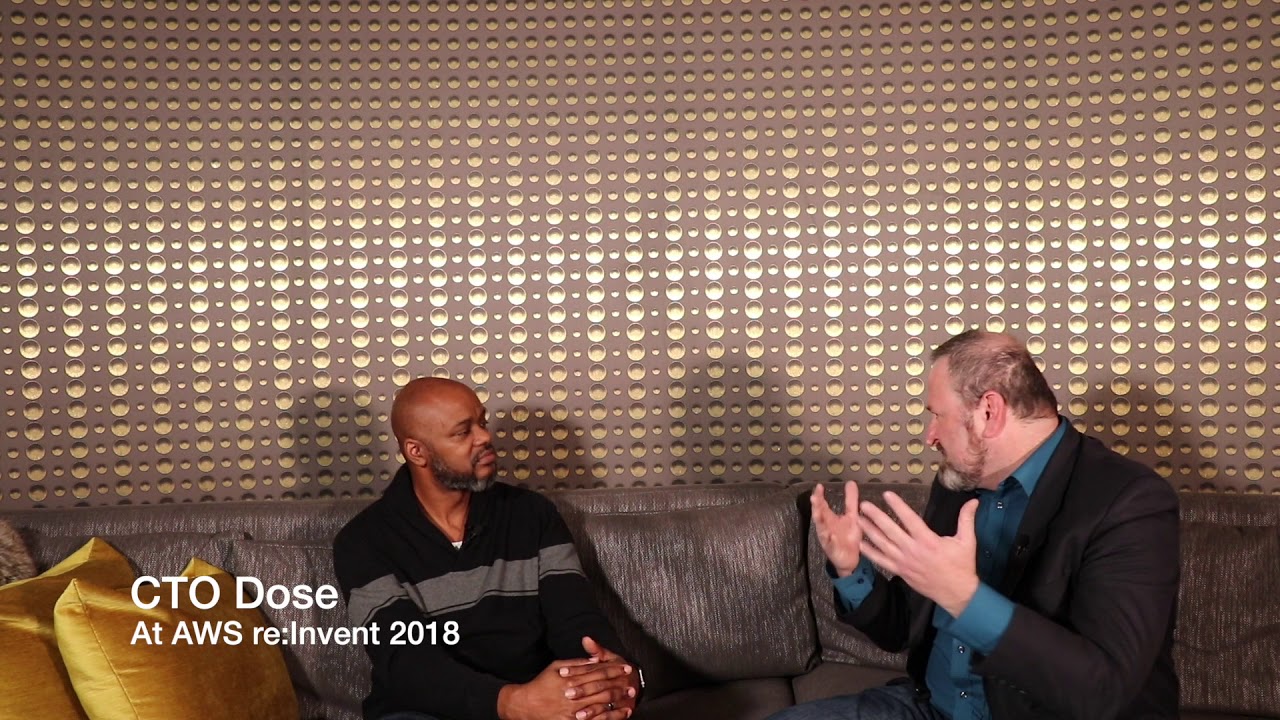
[Music] hey how's it going as chief Townsend from the CTO of Isaac comm you know what we're still here AWS reinvent Val Burt to vici co-founder and what's your title these things because the company has grown companies drawn were north of 10 people now uh-huh co-founder and CEO okay two other key co-founders Kumar Pauline yappin he is our CTO and Scott Sanchez a little easier to say he's our CSO but effectively go to market Lee's also a DJ officer and all things go to market and
that makes sense that he's the CSO because as we're talking about the gold market strategy and is his kind of come to market question of why would you buy the solution yeah this is something with that we've talked about over the past couple of years you know the as the vision of pencil data has grown and you guys have talked to potential customers you come out with a product it has matured you know from a buzz word perspective you guys have all the buzz words watching
and data multi-cloud but this is something you know you you have a data fabric a data focus history with your experience in enterprise data you know the pain points that customers have around data the cloud introduces new pain points what's the latest vision for pencil data so the latest vision and has been for quite some time is all around adding the strength of blockchain to enhanced business integrity mmm-hmm so the use cases particularly as Scott you know came brought him forward by asking an important question
when would you buy as a folks that what would you buy the use cases have been fascinating one of the better ones I can think of right now is in the medical imaging space so you've got MRI machines in hospitals right we're doing a pilot in Minneapolis with an array of 12 MRI machines in one hospital first thing that stands out is generate a hundred million images per year that's a lot that's a lot and this is healthcare it's regulated the authenticity of images is really
important particularly these MRI machines now getting advanced they've got some machine learning built into them automatically you know detect or perhaps even pre diagnose tumors or things like that so people really want to know what the original authentic image was right the interpreted image was perhaps some other derivative things and we don't store that data you know we don't control that data per se or protect it we verify the authenticity of that data so we register it when it's captured and then when a fellow specialist
or the insurance payer or some regulator down the road wants to verify the authenticity of that image we help verify the authenticity of the image you know and it can be shared it could be you know leaked even unfortunately we can't control that but for insurance purposes for regulation purposes for all sorts of other things and I'll talk a bit more about these cases it's deeper than that for supply chain integrity purposes we verify the authenticity of these things so you know it's it's one of
those use cases that you once you hear you think of obviously you know my I have a relative that I just talked to earlier today that they had to go get a image they they live some distance away from their hospital they went to get some scans done that relatives need to give those scans to a different provider health care provider so they literally had to go make the trip back go pick up the scans yeah physically to take it to another healthcare provider and I'm
thinking wow that's a really easy email to sin or something I sell case but to your point it's health care data and it's not that simple you know and as we think about some of the physical examples of how we want to use block chain it's all about the integrity of the supply chain if the egg you you want to find out how the chicken head Salmonella miller well what if we could check it the supply chain all the way back to the edge exactly the
same concept so let's talk about a little bit about the technology the I get the the applicability the technology itself like the when I think of data I think of something that can eat how that abstraction of like a image and the token or blockchain black paint token associated with that image how that could that have that abstracting can easily be broken how do you guys ensure that the piece of data that was generated and the token that's associated to that piece of data how do
you ensure the integrity that throughout the entire lifecycle great question and there's a lot of buzzwords in this space there's a lot of confusion in this space and ordinarily in a young market you expect to have a phase of it in the early days the educational rights I remember cloud era and the first couple of years wasn't so much a Hadoop distro company they were a Hadoop training company remember that yeah a lot of revenue and training and then the distro you know started to become
more mainstream and that was a good revenue stream for them we're finding there's a lot of education needs to be done particularly not just around blockchain but around separating the cryptocurrency hype and price and speculation from the very applicable today enterprise use cases and value right so there's work we're doing in that space and specifically to answer your question you know what do we do to make it safe what do we do to make it simple what do we do on our end to make it
scalable it's take an enterprise approach to it so you would think that you know typical enterprise today doesn't say I'm an Oracle shop if you have any decent size you've got sequel server in there you've got maybe db2 if you've got mainframe you've got you've got a whole bunch of those sequel things like Cassandra and so forth so there's no such thing doesn't you know a monolithic database Enterprise anymore right the blockchain world would like you to believe that right the blockchain world would like you
to believe that you only need one kind of blockchain whether it's the Bitcoin network whether it's a theory and whether its stellar lumens you know the waves platform what-have-you mm-hmm you and I know in the enterprise things don't work that way no so one of the first decisions we made is to build a lot of investor protection and it's a customer invest protection in by abstracting from any one specific block hmm by offering the integrity value across multiple block chains and some odd cases in parallel
maybe more than one block chain in reality one at a time but not being stuck to one so if you start as many customers want to let's say on a private blockchain more comfortable that way we support the common flavors of hyper ledger today so that historically was fabric that was contributed by IBM sawtooth by Intel mmm-hmm we're looking very much forward now to working with the Intel nightly intel south with what the vmware project concorde team and helping not only you know introduce that to
the market through the hyper ledger foundation but more importantly what we directly add value to is accelerating enterprise adoption of so accelerating enterprise adoption of project concorde is something we're looking forward to and I will be the third hyper ledger blockchain that we support and we always knew we'd need at least one public blockchain and there's several now but the first one we support is a theory so I've never heard anyone say that they're going to abstract away the underlying blockchain and provide value on top
of that so that you can bring the blockchain that meets your business requirements so if you're looking at a hyper ledger and you want a hyper ledger that provides not only the validation of the transaction but offers some level of I don't want to call it the community and reputation so you know iBM is built big on how do you validate yes this person validated the bot chain but just because they validated that transaction doesn't mean that I should trust them how do I trust that
person so awhile in Bitcoin that may not be necessarily an issue in Bitcoin when you're doing business to business transactions reputation matters and if the blockchain can provide that great now as I look at applications that sit on top of the back blockchain and consume it how do I make sure that my application enables me to use all the value of that inherent so from a product perspective how do you what's the have you gotten to the point that this is a product that you guys
can offer a sell so we released a public beta around April of this year and it was just a really pleasant surprise in terms of the breadth of use cases that came forward so we just scratched the surface on a medical imaging one there's actually a lot more to that one there is autonomous vehicles autonomous taxis use cases and ironically it's a very similar workflow to the medical imaging one in terms of you've got a complex device and industrial IOT machine as I like to call
it with many many versions of software that have to be certified right we enable that through the blockchain lots of sensor state configurations so that I have to refer the unfortunate fatality in Tempe you know with the uber the Auburn Volvo SUV you have to remember there the software worked 100% perfectly the sensors functioned 100% correctly what led to their fatality was plastic bags floating across the street slowing the SUV down and the uber engineers or the operator decided to you know gradually detune the sensitivity
of the motion detectors the motion sensors so that at least initially the SUV did the right thing and drive through a plastic bag and not make the right unpleasant not slow down not use bright or more energy or so forth but unfortunately they didn't know where to stop and they kept detuning to the point of unfortunately not being able to sense in the dark an actual pedestrian and you know what happened afterwards so insurance companies and I wise to this and it's not just about insuring
the car as a simple opaque atomic thing it's about digging deeper what were the software releases you know of all the micro of all the firmware not all the other supply chain suffer supply chain components that led to the master image of the car what were the neural network algorithms trained as to identify objects and take corrective action how were the sensors configured all those questions need to be answered so it becomes a very granular use case in that where let's say for every new passenger
in a self-driving taxi case you've got to certify the complete state of the vehicle hundreds of sensor hundreds of individual software releases as well as the GPS coordinates as well as the infotainment data as well as camera frames particularly for an incident like an airbag sensor deploys during a ride something happened so it's really important to know what the camera frames were before and after and it's really important for the first responders to trust that data for the insurance claims adjuster the next day to trust
that data and for the NTSB regulator you know for years on out to trust the authenticity of that data as they're making policy so a lot of a lot of questions popped up into my head of you're describing one is not even the questions more of the use cases my daughter does she works for a health care insurance provider and she does call tree algorithms and I was talking to her about you know obviously one of the things you know we get sees a flowchart we
can't help but to absolutely ask questions and the one thing that I you know actually about was like kind of revision controls because as she was describing it to me I'm like oh that's a that's that's just a development pipeline yeah and you guys have all the challenges of a C ICD pipeline so I'm asking you her these what she thought was brilliant intuitive questions or just you know questions we get in enterprise IT all the time so that that's just you know an obscure just
another example of a use case that that can use that because when you have multiple sources of data inputs and where people can relate that data or or add to the overall data repository of data lake another buzzword in there the the it's critical that as you're building technologies or infrastructure on that data the data is now in fact become infrastructure it just has to be reliable and when it's not reliable you have to be able to trace back to where the data was manipulated or
corrupted so that that caused a problem or even even if it didn't even if the data didn't corrupt what changed or what did we not consider a world was the point of change so one I guess one of the inherit advantages and I guess disadvantages to your approach is one of the disadvantages is that you're reliant upon the underlying underlying blockchain so as we look at the underlying blockchain today the technology you mentioned the different product drives one of them is Concorde the challenge of the
technology right now is that the transactional speed isn't there where the skill that most enterprises will need its skill there are niche examples your healthcare example is a great one where it the the speed of transactions the latency really doesn't matter and that solution the the images don't move that fast between a hospital the hospital yet but as the overall solution skills or lack of skill where are you finding kind of I guess you haven't rent a practical problem yet with the limitation of the online
blockchain but what kate well you what do you see where improvements have to be made so that ultimately pencil data is successful great techy question so enterprise people always have solutions - that's right I mean right engineering scale is one of the most fun propellor had things to do we have the benefit of having a less is more approach so one of the things we educate our customers on early on is that you know we don't do crypto so there is an underlying token and there's
a kirtaniyah market value like every minute every second in token we don't depend on that value at all right now we don't even depend on the token itself we depend on the integrity of the blockchain that the token itself depends on exactly that's the key thing for us so we're able to implement much like Bitcoin if you've read about lightning aetherium with plasma and other solutions these are now a whole category of off change scaling solutions that address specific use cases that literally are designed to
complement the blockchain because a really good blockchain is highly decentralized but in that particularly globally distributed there's Network latency inherent there's just size of blockchain there's there's all sorts of Layton sees you know in terms of actually transacting on a blockchain so an off chain solution is designed to specifically address certain use cases and be the drue and be loyal to the underlying blockchain itself so now that you rely on the actual token you extract it this is the advantage of extracting from the box chain
from the independent blockchain from individual block chains that you've extracted the the challenge of legacy and selling transactions whereas you can use off bot chain solutions to do the selling of transactions you're relying on the the blockchain for the integrity but not for the actual transaction yeah and we all remember you know ten years ago we were all learning but eventual consistency right sequel databases we've got something you know we're not patenting the term but we have a patent that uses that technology called eventual consensus
so because we don't do crypto currencies we don't depend on token values and things like that we have a much simpler surface in terms of attacks right offend against replay attacks simple attacks and so forth so we're able you know loosely without disclosing too much in our patent because it's still pending you know we buffer a lot of decentralized registrations on our platform and verifications it's the power of registering something in multiple locations automatically and then having it verified by multiple locations automatically is really what
the integrity is based on but we're able to do that by buffering it to a very conventional no sequel database upfront we assume full chain of custody as soon as we do that so we use hashing technology internally to make sure that our database transactions haven't been tampered with right we detect that as well and we put all that on the underlying blockchain but by essentially buffering it with a database upfront we can give you an ear instant latency even to the point of not just
millisecond latency but microsecond if you need that not many customers are paying for that you know but we've designed it to support that kind of latency and also a near zero cost very fractional costs a fraction of a token value fraction of fiat currency like a US cent and so that it becomes very very efficient that's the default configuration for most of our customers and we always allow customers to basically use our very simple interface that's part of our real visible value to customers is instead
of learning about wallets and and you know smart chain or smart contract programming and token economics and governance of blockchains we offer two restful api register verify super simple that's really what we get a lot of our enterprise traction from but you know if you can do that by default you don't pay a lot of cost or anything and you don't have a lot of legacy if you want the power of the raw blockchain we expose that to you well well I have 800 like we
do we talked about this part for this hour hour and a half and not scratch the surface you guys have been doing a lot of work over the past couple of years bring this market of super excited to see the product mature in it in a while because I think you saw a legit concern as data becomes more diverse where it diversified were at AWS reinvent people are talking about multi cloud the ability to transact business across the world across the same data set this challenge
will be perverse so looking forward to understand the work that you do until then until the next time we get to sit down if people were anxious to talk to you engage Pennsylvania how do we do so you can find out more about the company itself at pencil datacom the service you know that's effectively a simple blockchain platform is so popular we branded it as chain kit calm it's got a Twitter handle pencil data has I can underscore that's a long to already about how Twitter
that's the governance of Twitter accounts but it's pencil underscore data and of course myself you know Val double zero value on Twitter and we've got Scott Sanchez on Twitter Kumar's mega MDA I think on Twitter lots of ways to find this word on links and of course as well I appreciate you stopping by the CTO of our thinking label is - C - Eliza sweet ahead of us reinvent enjoy having the conversation if you want to find more conversations like this you can find me on
the web the CTO of Isaac common is the website where we post all of these videos you can find me on twitter at CTO advisor and of course only again you can do google search for or we can search for Keith Townsend until then we'll talk to you next CTO DOS


